Weather Stripping and Indoor Comfort from Draft Control
Weather stripping is a seal-contact measure that helps reduce drafts around movable door frames and window frames. It limits uncontrolled air movement where operable edges meet the frame, so cold air is less likely to pass through contact gaps and affect indoor comfort.
Drafts often become noticeable when a closed door or window has weak seal contact along an edge, sash, jamb, or threshold area. Weather stripping can help when the draft comes from frame gaps that need compression or closer contact, especially around parts that open and close during normal use.
Weather stripping can improve indoor comfort by reducing the movement of cold air near doors and windows, but the result depends on the draft source, seal condition, frame movement, and room exposure. It helps most with movable-edge air leaks and frame contact gaps, not unrelated wall, glass, or HVAC problems.
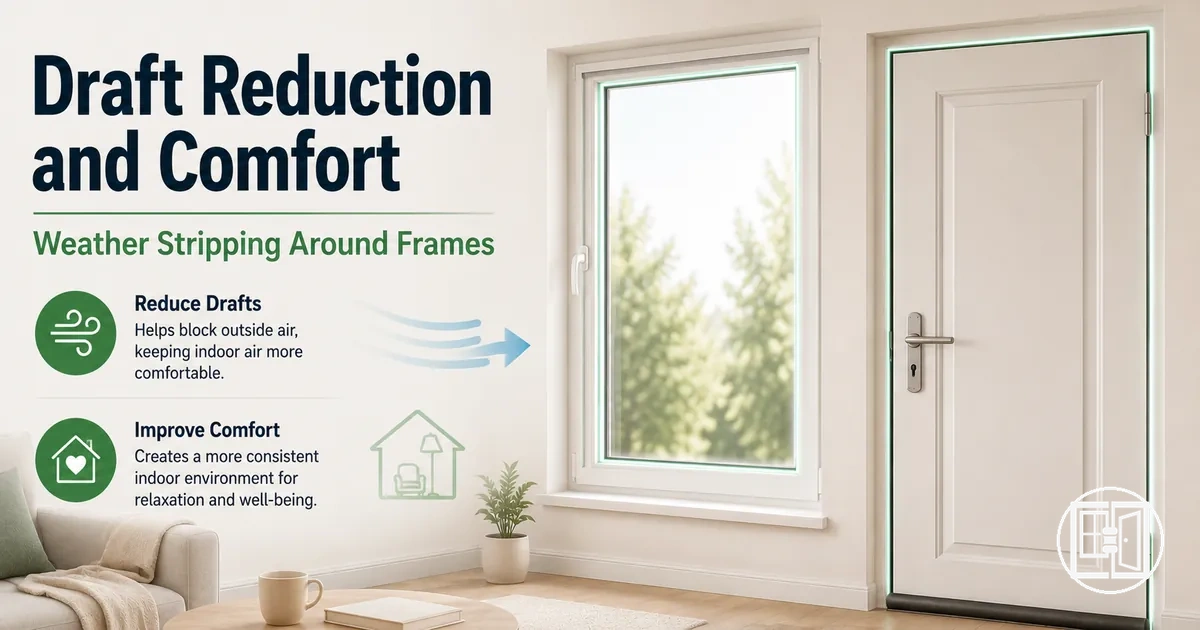
The featured image for this page should show weather stripping at an operable door or window edge, with visible seal contact and a subtle draft indicator. That visual frame supports the main idea of this section: comfort can improve when weather stripping reduces uncontrolled air movement around frames.
How Weather Stripping Improves Indoor Comfort
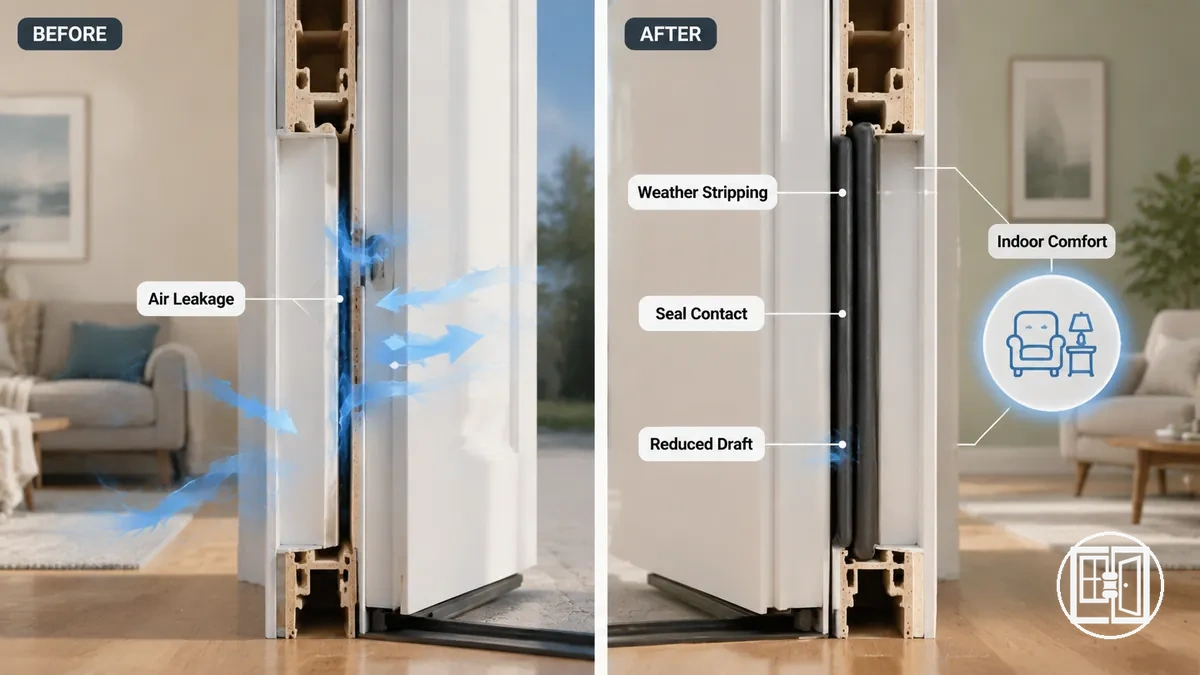
Weather stripping can improve indoor comfort by reducing uncontrolled air movement around door contact points and window contact points. Better seal contact limits air leakage at movable edges, making cold drafts less noticeable while supporting more stable indoor conditions. The diagram below shows how weather stripping improves indoor comfort by illustrating how seal contact reduces uncontrolled air movement around a door or window.
- Reduced drafts when weather stripping maintains effective seal contact around door and window edges.
- Less noticeable uncontrolled air movement when contact points close more consistently.
- Temperature stability may improve when air leakage through frame gaps is reduced.
- Occupant comfort can increase, although the effect depends on gap size, seal condition, room exposure, and air pressure.
Draft perception often comes from moving cold air rather than the average room temperature. A small frame gap beside a door or window can feel colder than the room temperature suggests because the moving air passes across occupied areas. Weather stripping helps reduce this effect by improving seal contact, but the level of comfort gained depends on the size of the gap, the condition of the frame, and the quality of the weather seal.
Where Cold Drafts Enter Around Doors and Windows
Cold drafts most commonly enter around the movable edges of doors and windows where seal contact has weakened or frame gaps have formed. Typical draft entry points include the threshold, door jamb, window sash, and other contact areas that open and close during normal use. The image below highlights Where Cold Drafts Enter Around Doors and Windows by showing common cold-air paths before the location checklist, helping relate these entry points to local comfort loss.
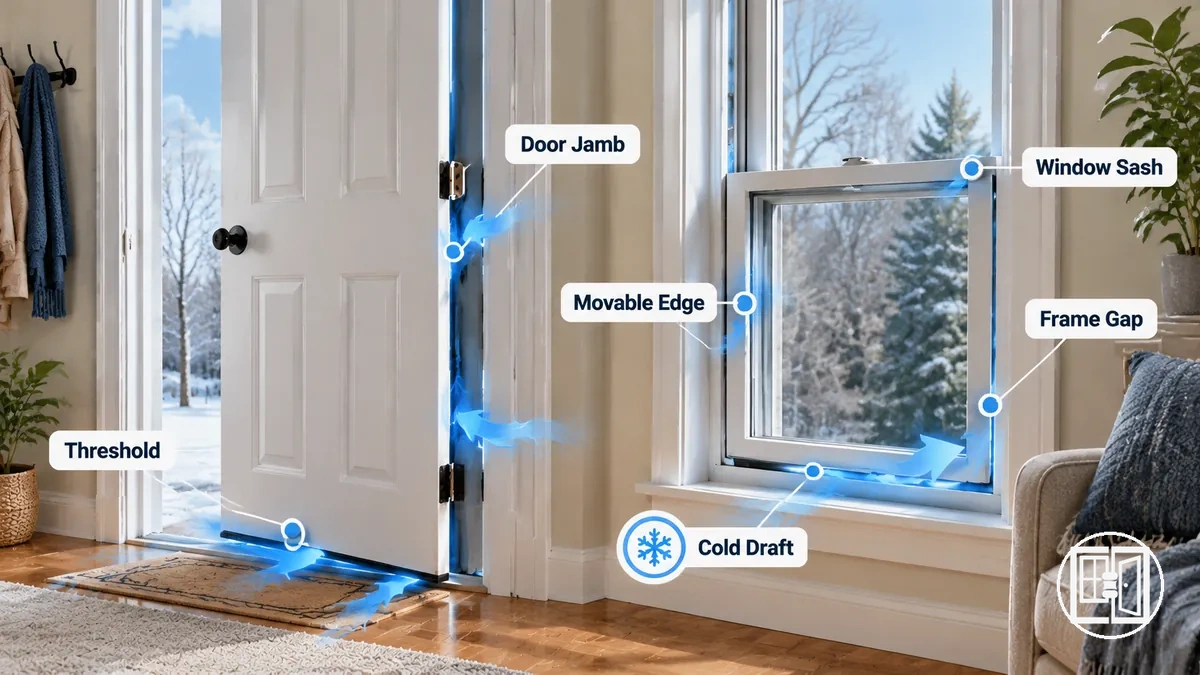
When a door or window part develops a contact weakness, even a small frame gap can create an air path that allows cold air to enter. Reduced seal contact at a threshold, jamb, or window sash may make nearby areas feel cooler because moving air is more noticeable. The comfort effect depends on the size of the gap, the condition of the weather seals, and surrounding conditions rather than on a single factor alone.
Not every cold draft around doors and windows is caused by weather stripping or movable edges. If cold air comes from broader building-envelope leakage rather than frame contact areas, broader air leak fixes may be needed as a separate troubleshooting approach.
- Threshold: Worn seal contact at the bottom of a door may allow cold air to pass through, creating a draft near the floor.
- Door jamb: A contact weakness along the side of the frame may create an air path that affects nearby comfort.
- Window sash: Frame gaps where the sash meets the frame may allow cold drafts that make the area beside the window feel cooler.
- Movable edges: Weather seals that no longer maintain consistent contact may allow intermittent drafts, especially when air pressure changes.
- Frame gaps: Small openings around contact areas may contribute to local discomfort, although other sources of coldness can also be involved.
Movable Edges, Frame Gaps, and Seal Contact Points
Movable edges can create local air paths when uneven contact leaves small frame gaps after a door edge or operable sash is closed. Consistent compression along seal contact points helps interrupt these air paths, while uneven contact may allow cold air to pass through and reduce comfort. The image below shows Movable Edges, Frame Gaps, and Seal Contact Points by illustrating how uneven compression creates a local draft path.
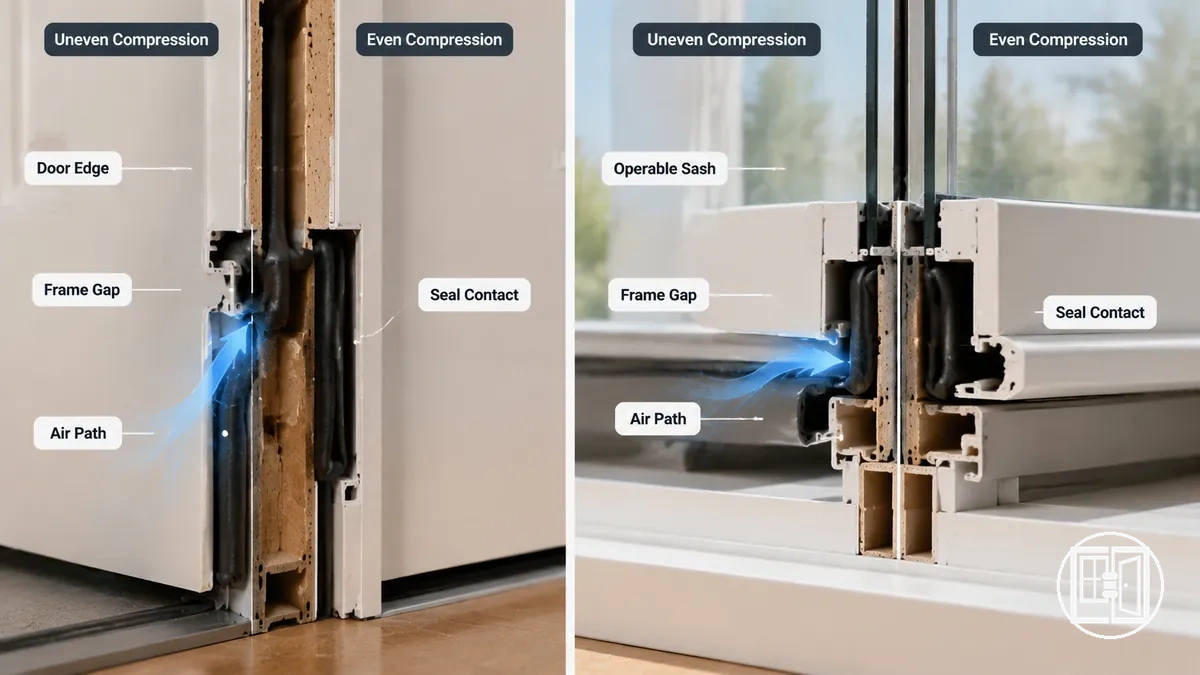
- Movable edge: An uneven closing edge may leave a local air path when seal contact is incomplete.
- Frame gap: A small contact gap can remain even when the door or operable sash appears fully closed.
- Seal contact point: Even compression helps interrupt the air path, although the result depends on the gap shape, compression, and the condition of the weather stripping.
A closed door edge or operable sash can still allow a draft when compression is uneven across the seal contact points. For example, one part of the frame may compress the weather stripping while another leaves a narrow frame gap that creates a local air path. Weather stripping may help reduce this draft when the opening is movable and improved seal contact can be achieved, but the effect depends on gap shape and compression rather than on the closed position alone.
Door Bottoms, Window Sashes, and Operable Frame Areas
Door bottoms, window sashes, and other operable frame areas are the locations where comfort-related drafts are most commonly felt around movable openings. Each part can create a different draft path depending on its gap position and contact condition, so the location of the opening often influences where perceived cold air is noticed. The image below labels these operable frame areas to clarify their local draft paths without showing repair steps.
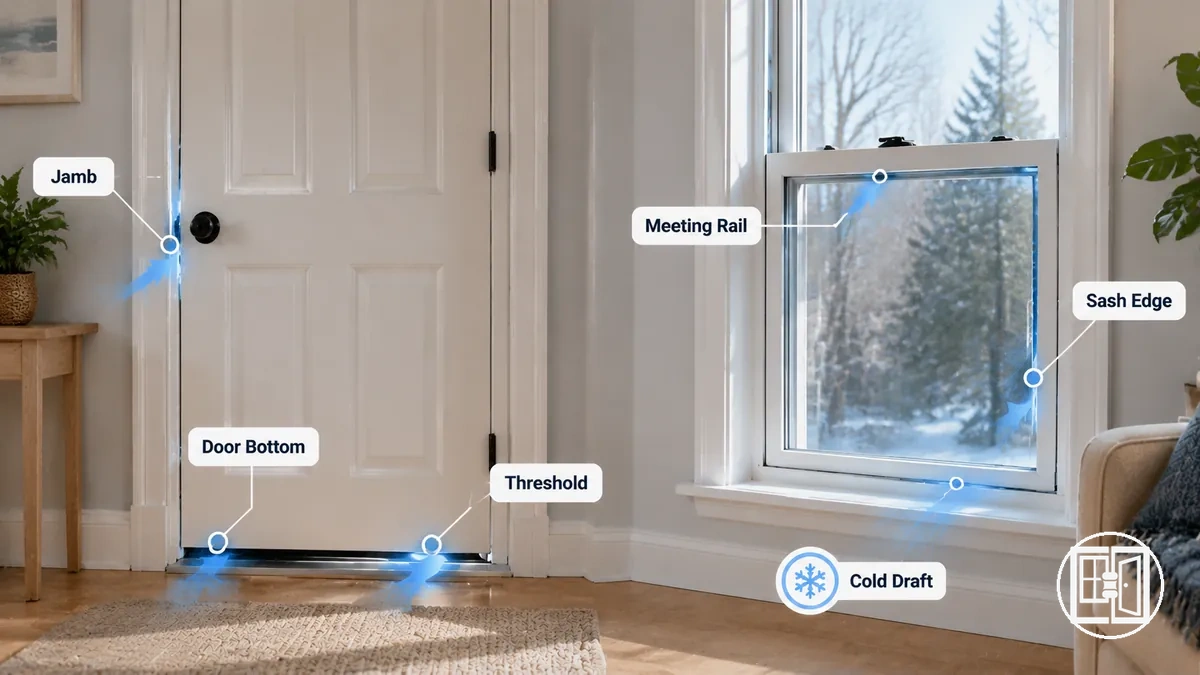
| Part | Common draft path | Comfort clue |
|---|---|---|
| Door bottom | Gap position near the floor or door sweep area | Perceived cold air while walking past or standing nearby |
| Threshold | Uneven contact where the door closes | Cool air may be noticed close to the floor |
| Jamb | Reduced seal contact along the frame edge | Draft may be felt beside the door opening |
| Meeting rail | Contact line between movable sash sections | Local draft may be noticed around the middle of the window |
| Sash edge | Window sash edge with a small gap position | Perceived cold air near seating areas beside the window |
People often notice drafts while sitting beside a window or walking past an exterior door because those positions are close to operable frame areas. A window sash, meeting rail, door bottom, threshold, or jamb may create a more noticeable sensation of perceived cold air when gap position and contact condition allow a local air path. The level of discomfort depends on the condition of the operable parts, surrounding exposure, and where occupants are positioned.
Comfort Changes After Drafts Are Reduced
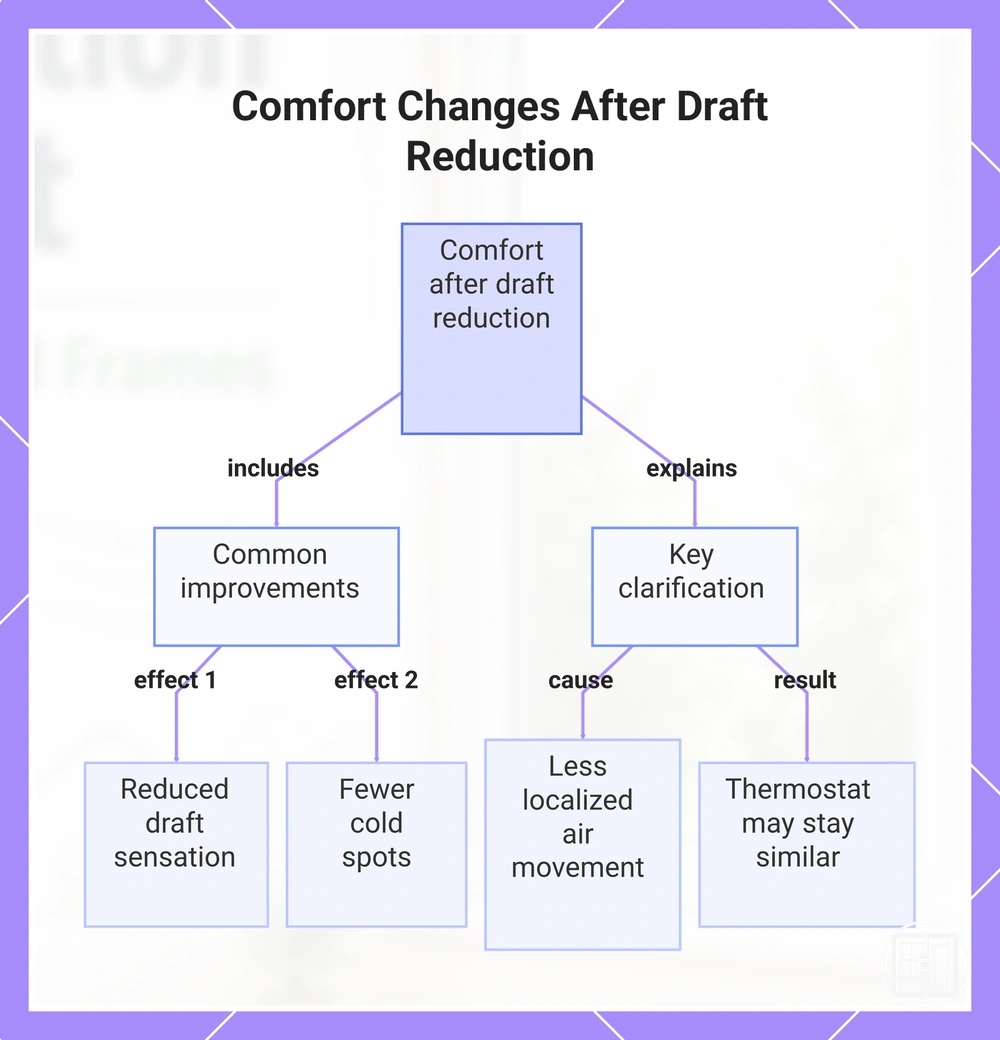
Comfort changes are usually felt as reduced draft sensation and steadier local conditions after weather stripping reduces uncontrolled air movement. Reduced drafts can make nearby areas feel more comfortable, although the outcome depends on gap size, seal condition, and room exposure.
Common comfort changes after draft reduction may include:
- Reduced draft sensation when weather stripping limits uncontrolled air movement around movable openings.
- Steadier perceived temperature when reduced air movement makes local conditions feel more consistent, although the effect varies by room exposure.
- Fewer cold spots near doors or windows when seal condition helps reduce localized airflow.
- Less discomfort near frames, with the result depending on the draft source, gap size, and seal condition.
Reduced air movement can change how a room feels even when thermostat settings remain similar. Less moving air around doors and windows may reduce the sensation of cold spots and contribute to a steadier perceived temperature without implying a fixed temperature increase. Comfort changes often relate to local air movement rather than a measurable change in room temperature.
It is a common misconception that comfort changes always require a noticeable change in thermostat settings. In many cases, thermostat readings may remain similar while comfort perception improves because reduced drafts lessen localized air movement. For related considerations beyond indoor comfort, see energy and noise benefits.
This chart shows the main comfort improvements from reducing drafts and explains that these changes result from reduced air movement, not a temperature change.
More Stable Indoor Temperature
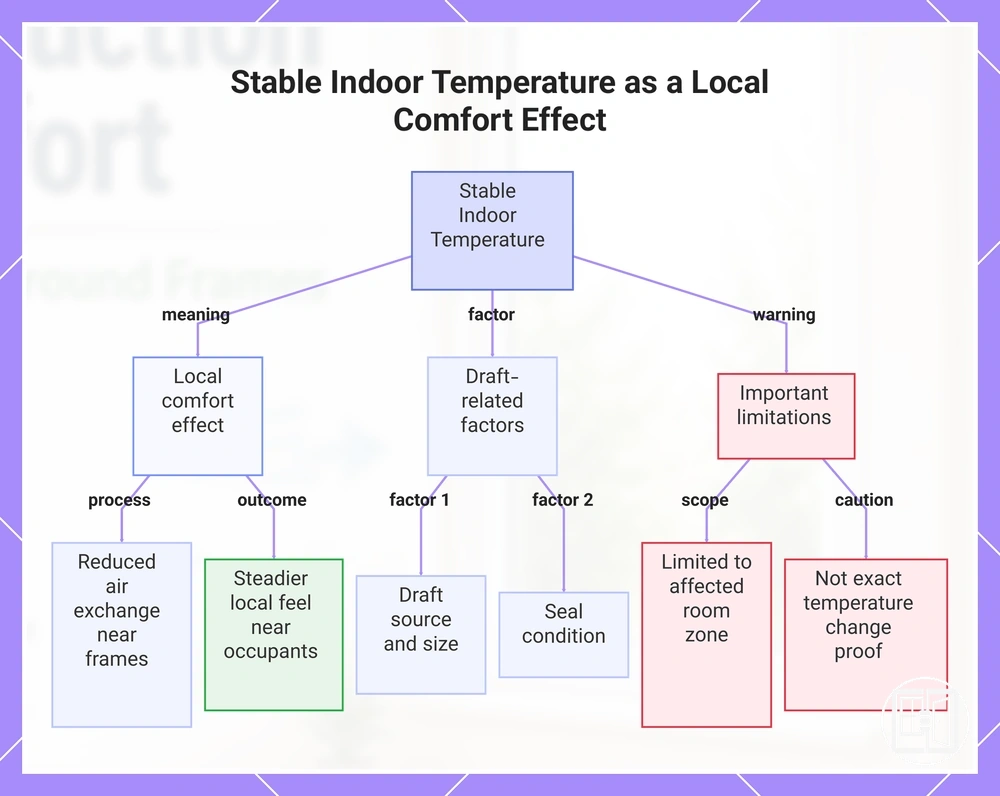
Stable indoor temperature is usually experienced as a local comfort effect rather than a guaranteed whole-home result. When weather stripping reduces air exchange around frames, the room zone nearest an exterior door or window can experience less temperature fluctuation and a steadier local feel. The outcome depends on the source and size of the draft as well as the seal condition.
A seating area beside a leaky exterior door, for example, may feel steadier after the door edge is sealed because reduced air exchange limits temperature fluctuation near occupants. Similar local comfort may be noticed near a window frame when drafts are reduced, although the effect is typically limited to the affected room zone rather than the entire home. These comfort changes should not be interpreted as an exact temperature change or proof of whole-home temperature stability.
This chart explains the stable indoor temperature effect from weather stripping as a local comfort result, its key influencing factors, and important limitations.
Fewer Cold Spots Near Doors and Windows
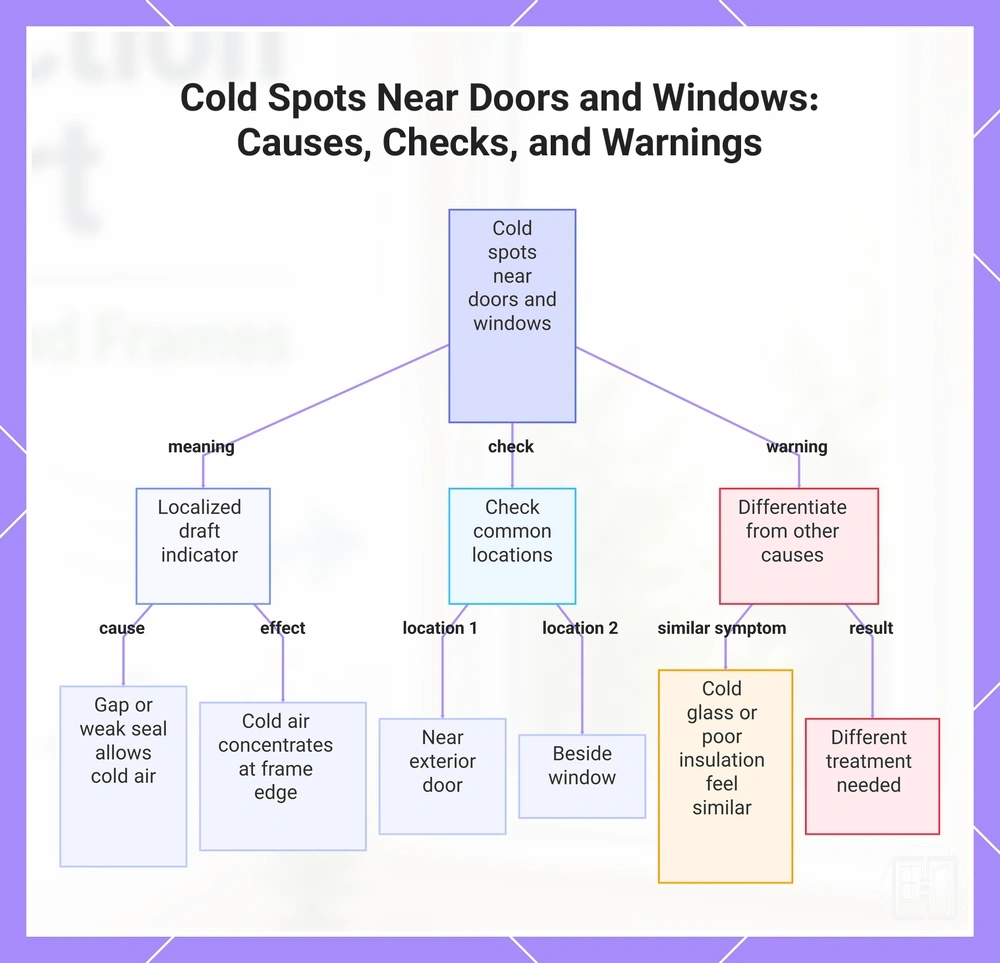
Cold spots near doors and windows can indicate localized drafts where a nearby gap or weak seal allows cold air concentration along the frame edge. These colder-feeling areas are often noticed near seating areas or walking paths because localized drafts affect comfort close to the opening. The symptom may suggest a draft-related issue, but it does not confirm that weather stripping is the cause.
If you want to quickly identify where localized drafts may be affecting comfort, check these common locations:
- Near an exterior door where a nearby gap or weak seal may allow cold air concentration along a walking path.
- Beside a window where localized drafts may create chilly areas around nearby seating.
- Along the frame edge where a drafty spot may feel cooler than the surrounding room without identifying a definite cause.
Draft-related cold spots can feel similar to the cool sensation caused by cold glass or poor insulation, but those conditions may require different treatment. Weather stripping may help when localized drafts are present around doors or windows, while other sources of local discomfort may need a different solution.
This chart explains what cold spots near doors and windows indicate, where to check for localized drafts, and why they may not always be caused by weather stripping.
Less Noticeable Air Movement Indoors
Less noticeable air movement indoors can occur when weather stripping interrupts an air path around doors or windows. Interrupting that air path reduces draft sensation near the opening, although the overall effect depends on seal condition, frame movement, and whether a small leak remains. The improvement is typically experienced as less noticeable moving air rather than a change in temperature.
During windy conditions, a visible gap at a door edge may produce an obvious felt draft, while a small leak around a window edge may only be noticed by the sensation of moving air. Weather stripping can reduce draft sensation by interrupting the air path, although a small leak may remain if wind pressure or seal condition changes. Reduced noticeable air movement can make the area near doors or windows feel more comfortable without implying that every leak is fully sealed.
Seal Fit Factors That Affect Comfort Gains
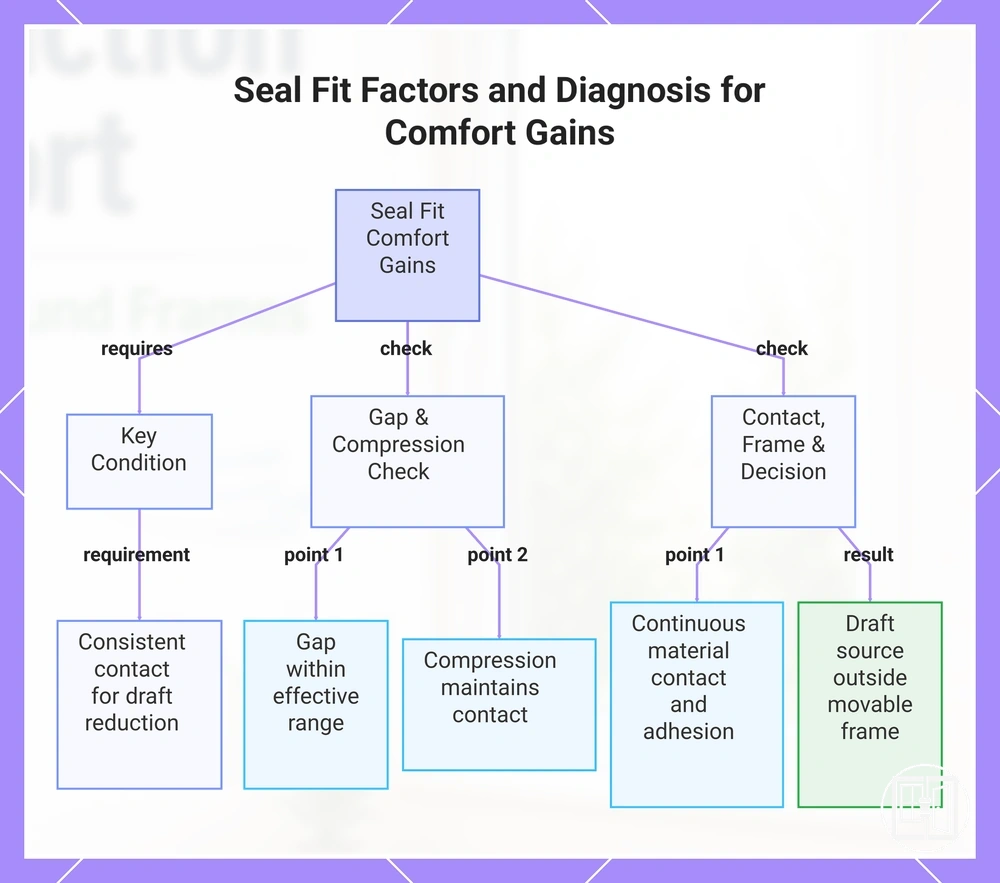
Seal fit controls comfort gains because weather stripping is most effective when it matches the gap and maintains consistent contact during normal use. The comfort effect depends on the relationship between the weather stripping type, gap size, compression, material contact, adhesion, and frame movement rather than on the presence of a seal alone. Consistent contact is the key condition for reliable draft reduction.
Use the following criteria to distinguish likely seal-fit issues from an unsuitable draft source:
- Weather stripping type: The weather stripping type should suit the gap and the way the door or window moves, or seal performance may be reduced.
- Gap size: If the gap size falls outside the seal's effective range, seal fit can be poor and the comfort effect may be limited.
- Compression: Compression should maintain contact without excessive force, because too little or too much compression can increase failure risk.
- Material contact and adhesion: Continuous material contact and secure adhesion help preserve contact consistency during repeated use.
- Frame movement: Changes in frame movement can alter contact points, so comfort gains may vary as seal fit changes.
Poor seal fit can reduce draft control, but it does not always mean the weather stripping type is unsuitable. When gap size, compression, material contact, and adhesion appear appropriate yet drafts remain, the draft source may be outside the movable frame. These decision signals help distinguish a seal-fit issue from an unsuitable draft source without turning the assessment into a buying guide or installation tutorial.
This chart shows the key condition for draft reduction and the criteria to distinguish seal-fit issues from an unsuitable draft source.
Gap Size and Consistent Compression
Gap size and consistent compression must match because seal thickness and seal profile need to close the gap without preventing normal door or window operation. The relationship between gap measurement, seal profile, and compression determines whether weather stripping maintains effective seal contact. Consistent compression should reduce the draft path while allowing normal operation.
| Condition | What happens | Comfort implication |
|---|---|---|
| Undersized seal | May leave a draft path because seal contact is incomplete. | Comfort outcome may be reduced when weak contact allows air movement through the gap. |
| Consistent compression | Seal thickness and seal profile match the gap size and maintain steady contact during normal operation. | Comfort gains can improve when consistent compression supports reliable draft reduction. |
| Oversized seal | May increase closing resistance or interfere with normal operation, creating operating risk. | Comfort outcome may be reduced if excessive compression affects seal contact or frame movement. |
An undersized seal may leave a draft path, while an oversized seal may create closing difficulty. Neither condition alone determines the comfort outcome because frame alignment, material recovery, and normal use can influence consistent compression over time. A qualified match between gap size, seal thickness, and seal profile is more likely to support effective weather stripping without creating unnecessary operating risk.
Foam, Rubber, and Adhesive Seal Contact
Material behavior affects draft reduction because seal contact depends on how well weather stripping maintains contact and recovers after compression. Foam, rubber, and adhesive-backed strips each affect the seal line through compressibility, resilience, and surface contact. Consistent contact and recovery help support comfort consistency during repeated use.
| Material/contact type | Helpful attribute | Comfort-related limitation |
|---|---|---|
| Foam | Compressibility can help maintain seal contact across uneven gaps. | Comfort consistency may decrease if contact recovery changes with wear or repeated compression. |
| Rubber | Resilience helps the seal recover after repeated movement and maintain surface contact. | Suitability depends on movement, gap shape, and operating conditions rather than the material alone. |
| Adhesive-backed strips | Adhesive supports surface contact by holding the weather stripping in position. | Draft reduction may decline if surface contact or adhesion becomes less consistent over time. |
Foam may provide softer contact where uneven gaps are present, while rubber can offer more resilient contact in areas with frequent movement. Adhesive-backed strips rely on stable surface contact to keep the seal aligned with the gap. These material differences help explain comfort consistency without ranking one material as the right choice for every application.
Where Weather Stripping Fits in Draft Reduction
Weather stripping fits in draft reduction by sealing movable contact gaps around doors and windows where closing surfaces meet. It is intended to interrupt an air path at these contact points rather than address every source of unwanted airflow. Its primary role is therefore at movable contact gaps.
Sealing an air path differs from simply reducing draft sensation. Weather stripping acts as a seal-contact solution by improving contact where doors and windows open and close, while other comfort aids may only lessen the feeling of a draft in certain situations. It is not a substitute for repairing all structural leakage.
Other draft-control options can complement weather stripping when they address a different location or comfort need. Fixed cracks usually require a different sealing approach, while window film, curtains, and draft stoppers may support comfort relevance depending on the draft source and room conditions. These options complement proper seal contact rather than replace it.
| Option | What it affects | Where it fits |
|---|---|---|
| Weather stripping | Movable contact gaps and draft reduction at closing surfaces | Fits where seal contact can interrupt an air path around doors and windows |
| Fixed-crack sealing | Stationary openings that do not rely on movable contact | Fits when airflow comes from fixed cracks rather than contact gaps |
| Window film | Glass-related comfort conditions | May complement comfort depending on window exposure but does not replace seal contact |
| Curtains | Perceived draft sensation near windows | May act as a comfort aid depending on room conditions |
| Draft stoppers | Air movement near the bottom of a door | May complement weather stripping in specific locations but do not replace proper seal contact |
Movable Seals Versus Fixed Cracks
Movable seals create a contact gap where a door or window closes against a frame, while fixed cracks are stationary openings that remain in place during normal use. This distinction explains weather stripping relevance because weather stripping is intended for movable seal gaps rather than stationary openings. The correct comparison starts with whether the opening moves or remains fixed.
| Condition | Cause and treatment category |
|---|---|
| Movable seal gap | A movable edge or sash forms a contact gap at the closing edge. Weather stripping suits this condition because it is designed to improve seal contact. |
| Fixed crack | A stationary opening, such as a gap in surrounding trim, remains fixed and may require a different sealing approach depending on the source of the air path. |
A draft at a closing edge may indicate a movable seal gap, while a visible opening in surrounding trim may instead be a fixed crack. Although both conditions can contribute to a draft path, they represent different types of openings and may require different approaches. This comparison only clarifies the boundary between movable seals and fixed cracks and does not provide repair instructions.
Weather Stripping Versus Window Film, Curtains, and Draft Stoppers
Weather stripping differs from window film, curtains, and draft stoppers because it seals an air path at a contact gap instead of primarily reducing heat loss or draft sensation. Window film, curtains, and draft stoppers improve comfort through different mechanisms, while weather stripping remains the primary solution for movable contact gaps.
| Comfort aid | Main function | Best-fit condition | Comfort limitation |
|---|---|---|---|
| Weather stripping | Seals an air path at a contact gap | Movable doors and windows where seal contact can be improved | May not address stationary openings or other sources of unwanted airflow |
| Window film | Helps reduce heat loss through the glass surface | Windows where glass exposure contributes to comfort concerns | Does not seal contact gaps around movable frames |
| Curtains | Can reduce draft sensation and buffer the room feel | Areas where window exposure affects perceived comfort | Do not seal the air path around the frame |
| Draft stoppers | Help limit air movement near the bottom of a door | Door-bottom leakage in suitable locations | Usually provide a local comfort aid rather than a complete door seal |
Weather stripping may be combined with window film, curtains, or draft stoppers when both contact-gap sealing and other comfort conditions affect the room. The most suitable combination depends on gap location, glass exposure, door-bottom leakage, and room use, so these comfort aids complement weather stripping rather than replace it.
Comfort Limits of Weather Stripping
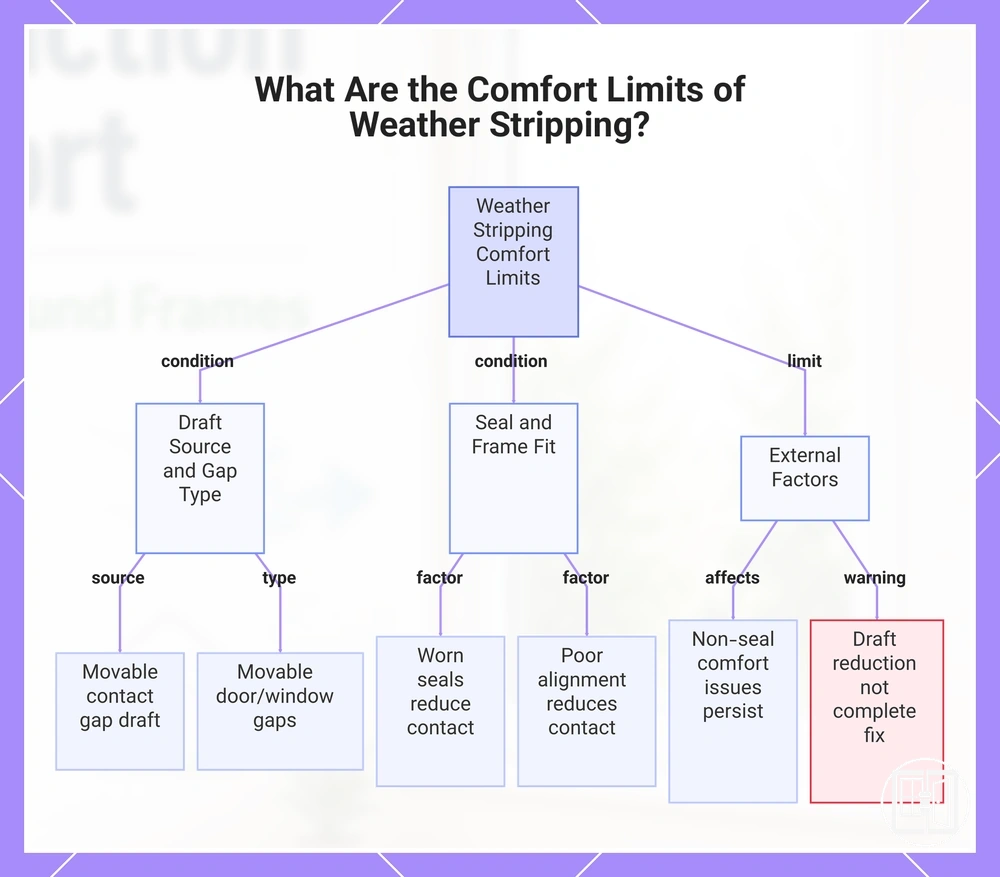
Comfort limits depend on the draft source, seal condition, frame fit, and room exposure. Weather stripping can improve comfort when unwanted air movement comes from an applicable gap type around movable doors or windows, but the comfort result depends on how well the seal matches the condition. Realistic expectations come from identifying the source of the draft before judging the outcome.
The criteria below help separate weather stripping limitations from adjacent non-seal problems that can affect indoor comfort:
- Draft source: Weather stripping can help when the draft originates from a movable contact gap. Comfort may remain limited if the airflow comes from another location.
- Applicable gap type: Weather stripping is intended for movable door and window gaps. Other opening types may require a different solution.
- Seal condition and frame fit: Material condition and frame fit influence seal contact, so worn seals or poor alignment may reduce the comfort result.
- Room exposure: Rooms with greater exposure to outdoor conditions may still experience cooler areas even after draft reduction.
- Adjacent conditions: Cold surfaces, poor insulation, or HVAC imbalance may continue to influence comfort because weather stripping does not fully address these conditions.
Weather stripping is most effective when the applicable gap type, seal condition, and frame fit support consistent seal contact. When these conditions are met, draft-related comfort can improve, although room exposure and other non-seal problems may still influence the overall result.
It is a common misconception that reducing drafts resolves every comfort concern. Cold surfaces, poor insulation, or HVAC imbalance can produce similar symptoms and may remain noticeable after sealing drafts. Recognizing these adjacent conditions helps set realistic expectations without reducing the value of weather stripping for suitable contact gaps.
This chart shows the criteria that determine weather stripping comfort limits, including conditions for effectiveness, seal and frame fit, and external factors beyond draft reduction.