
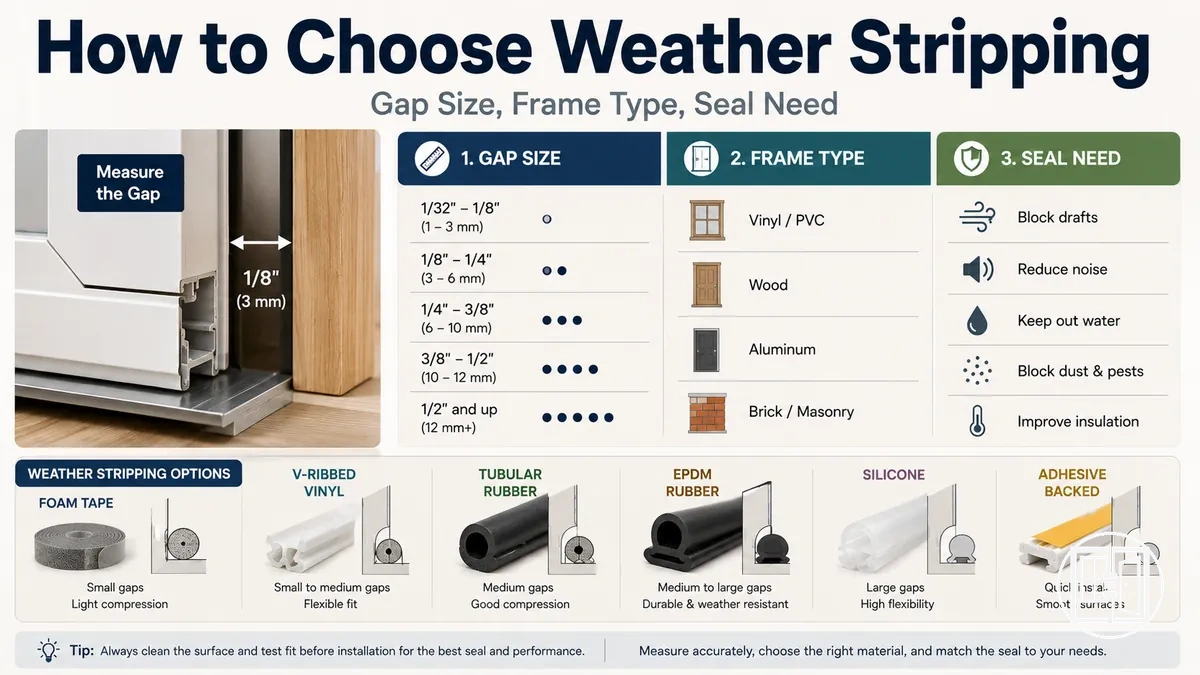
Window and Door Weather Stripping Selection Guide for Proper Fit
Proper fit in window and door weather stripping depends on matching the seal to gap size, frame contact conditions, compression behavior, seal type, mounting surface, and movement pattern of the door or window. Each of these factors influences how the weather stripping performs under real use conditions rather than theoretical fit. When these elements align, selection becomes a controlled decision process focused on fit rather than guesswork, making proper fit the main decision frame for this page.
- Gap size and variation across the frame
- Frame contact points and sealing surfaces
- Compression behavior during closing
- Mounting surface type and condition
- Movement pattern of doors or windows
Drafts, rattling, uneven contact, and closing resistance often signal that the current seal does not match the actual frame or movement conditions. In many cases, these symptoms indicate mismatches in compression level, gap coverage, or mounting alignment rather than a single failure point. When these conditions appear together, selection uncertainty increases, and the risk of overcorrecting with an unsuitable seal type becomes higher if the underlying fit conditions are not evaluated carefully.
No single seal type is universally correct for all windows and doors because performance depends on how well it matches specific gap, frame, and movement conditions. Foam, rubber, silicone, and other seal types behave differently under compression and surface contact, which means selection must be based on fit logic rather than general preference. The most reliable starting point is understanding the measured gap and how the frame interacts with the seal before choosing a specific type.
The image below represents how proper fit is evaluated by showing the relationship between gap size, frame contact, and seal placement across different conditions.
What Proper Weather Stripping Fit Means for Doors and Windows
Proper weather stripping fit means the seal contacts the frame or sash enough to reduce gap size while still allowing normal door operation and window operation. It is defined by controlled contact, consistent compression, gap closure, and draft control without restricting movement across the frame. The balance between sealing performance and smooth operation determines whether the fit is appropriate for real use conditions.
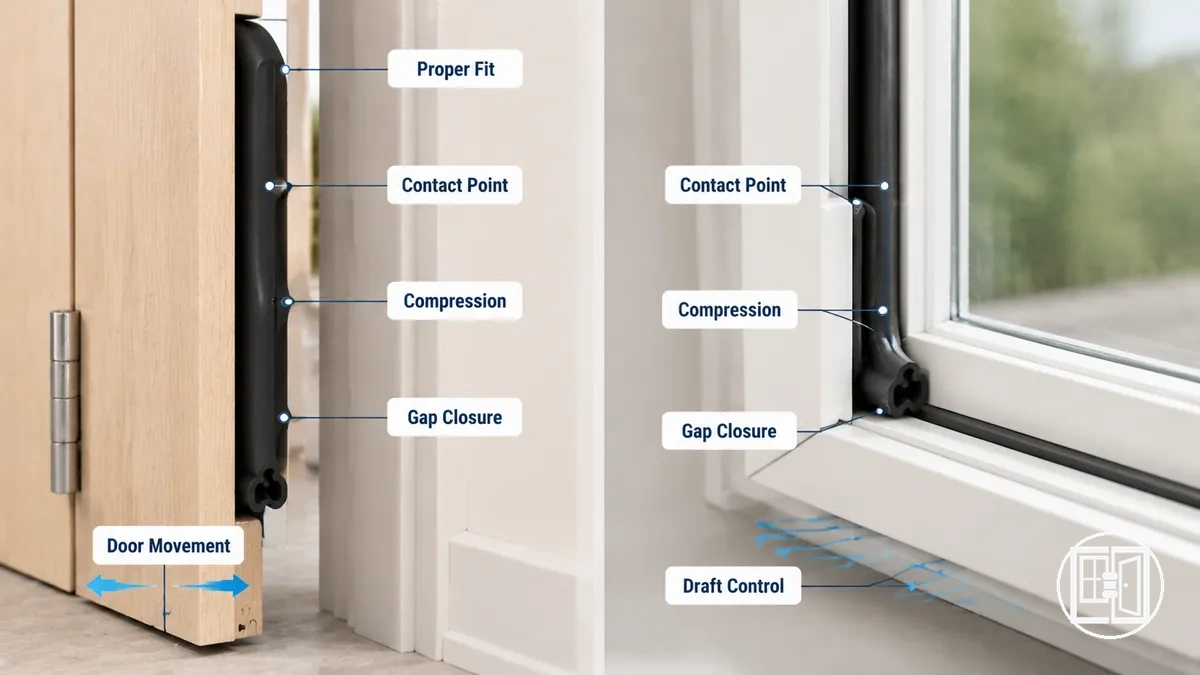
Proper fit depends on how the weather stripping manages contact pressure, compression range, and coverage across uneven frame surfaces. Gap closure must align with the actual clearance between the door or window and its frame, while still allowing controlled movement during closing. Draft control improves when compression matches the frame contact points rather than forcing excessive resistance. Doors and windows may behave differently because their movement patterns and clearance tolerances are not the same.
Filling a gap focuses on blocking open space, while proper fit also preserves normal door operation and window operation through controlled compression and contact. The goal is to reduce drafts without creating closing resistance that disrupts movement.
Thicker weather stripping does not automatically improve proper fit because excessive compression can increase closing resistance. Effective sealing depends on matching seal thickness to gap size and movement conditions rather than increasing material volume.
Measuring the Gap Before Choosing a Seal
Measuring the gap gives the starting reference for selecting seal thickness and compression range in window and door weather stripping. It defines whether a seal can achieve proper contact and gap closure without restricting door operation or window operation. Guessing instead of measuring often leads to mismatch between compression and actual frame conditions.
Uneven gaps across a door gap or window gap require repeated measure checks at different contact point positions to understand real variation. For example, a door frame may show a thinner gap near the top hinge and a thicker gap near the latch side, which can change the suitable seal thickness decision across the same opening. This variation means selection must account for both the thickest and thinnest points rather than relying on a single reading. In most cases, this produces a usable range for compression range rather than a single fixed value.
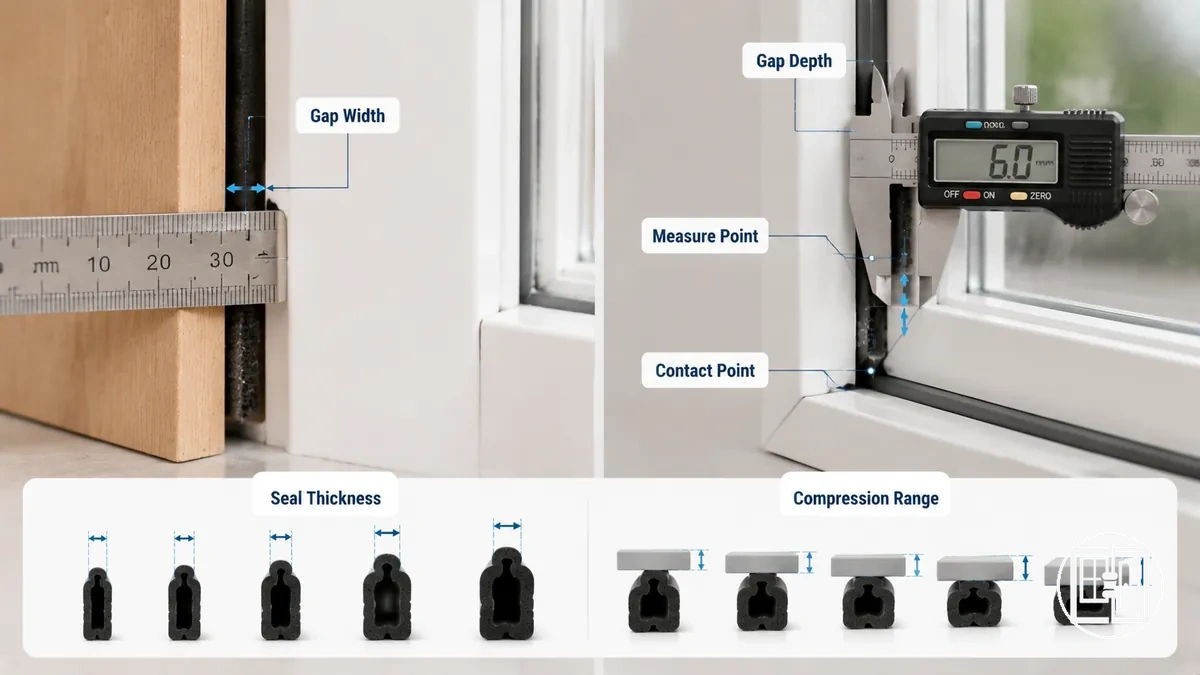
Measurement should follow a simple EAV logic: opening point identifies where the measure is taken, gap width and gap depth define the physical space, variation shows uneven gap behavior, and the result guides suitable seal thickness and compression range. This prevents selecting a seal based on a single point that does not represent the full frame condition. Manufacturer sizing still matters because seal specifications may vary across different weather stripping types even when measurements are similar.
This checklist organizes the key measuring points before selection:
- Measure gap width along the door gap to determine horizontal clearance and its effect on seal thickness
- Measure gap depth at the frame contact point to understand how much compression is possible
- Check uneven gap variations across window gap and door gap to identify minimum and maximum spacing
- Record repeated measure points to confirm consistency in sealing conditions
- Compare compression range needs against measured openings to avoid over-tight or loose fit
Door jamb, stop, and threshold gap points
Door gaps should be checked at the door jamb, door stop, and threshold because each point can require a different seal response. The side jamb, head jamb, latch side, and hinge side often show different clearance behavior that affects measurement accuracy. Keeping the focus on these points ensures the door gap is evaluated through actual contact conditions rather than assumptions.
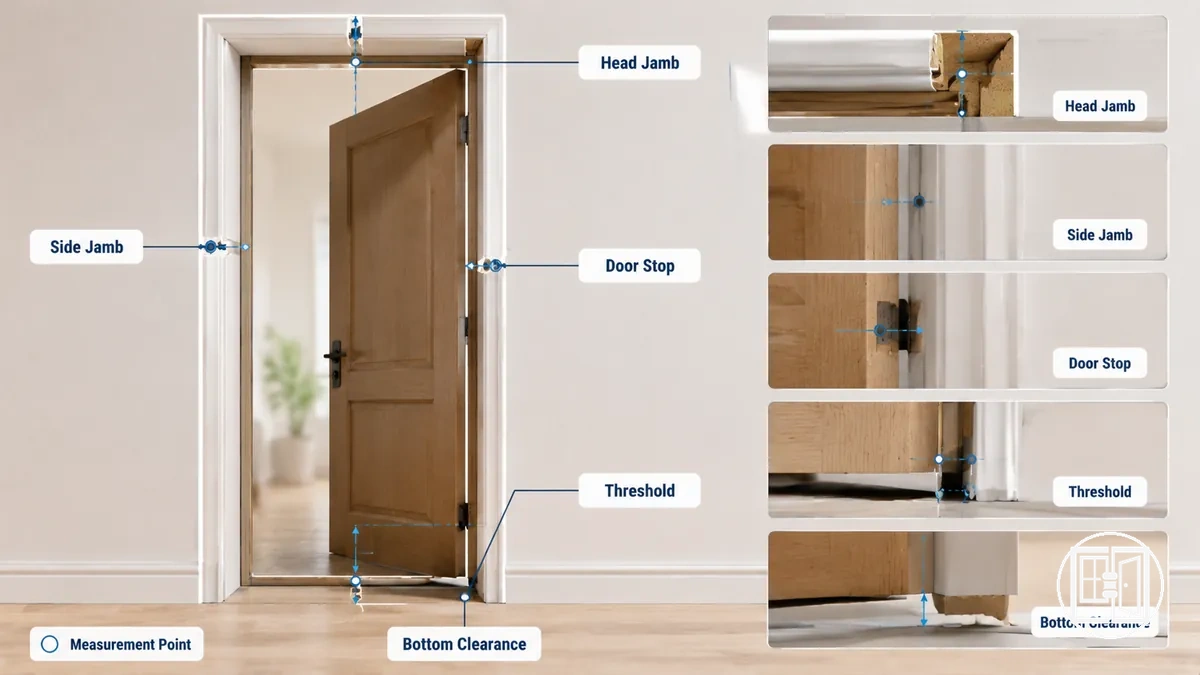
Uneven contact across the frame can show tighter compression near the hinge side and wider spacing near the latch side. This variation changes how the threshold and side jamb contribute to overall sealing needs. In such cases, selection depends on measured differences rather than a single uniform reading.
The following measurement points organize door gap assessment across jamb, stop, and threshold:
- Side jamb: check gap width along the door jamb to assess lateral clearance on hinge side and latch side
- Head jamb: measure top contact point at the door stop to evaluate compression consistency across the frame
- Threshold: assess bottom clearance at the threshold to determine sealing need at the door bottom
- Door stop: verify contact alignment where the door stop meets the closing edge to understand seal contact pressure
- Bottom clearance: measure clearance variation at the threshold zone to identify uneven sealing conditions
Window sash and frame contact points
Window sash and frame contact points determine where a seal can sit and compress within the window gap. The window sash, sash edge, and frame contact areas define the actual measurement zones that affect seal positioning and compression contact. These points vary depending on track layout, sliding channel movement, and available surface availability, which influences how the window gap should be measured.
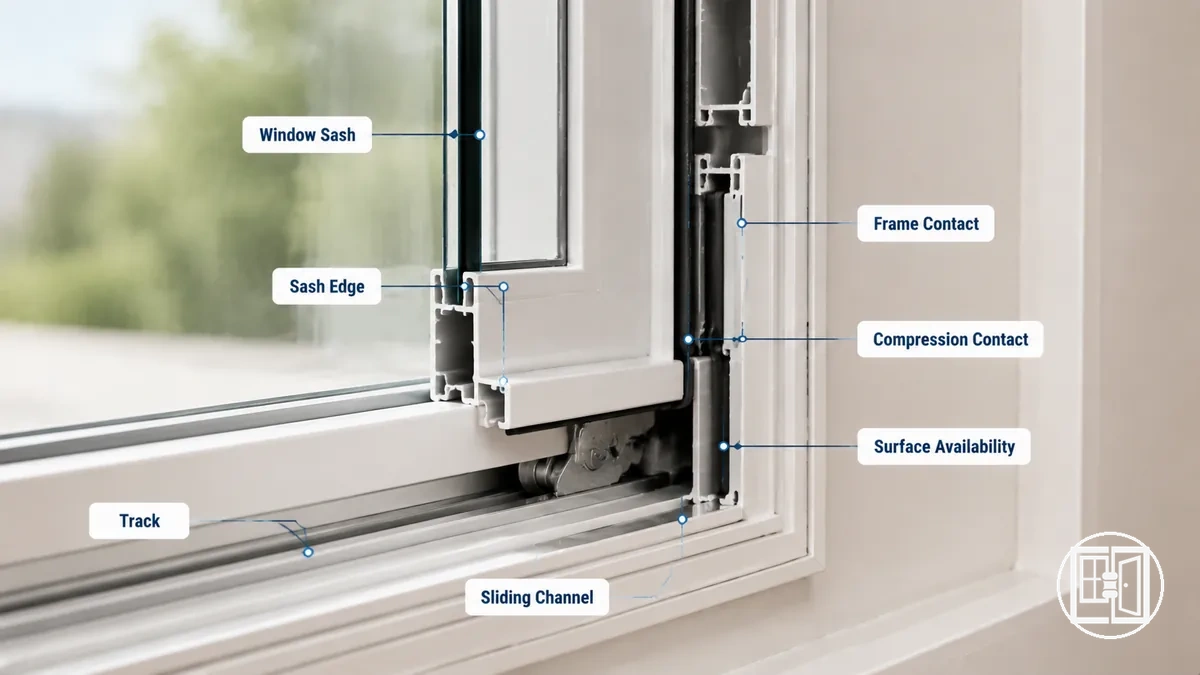
Sliding or loosely aligned windows may shift the effective contact zone between the sash edge and frame contact points, which can change where compression contact occurs. In systems with tracks or sliding channels, limited clearance may also affect how consistently the seal can maintain contact.
The following checklist outlines the key window sash and frame contact variables used for measurement:
- Sash edge: check where the moving sash meets the frame to identify primary seal position
- Frame contact: assess usable contact surfaces that support consistent compression
- Track / sliding channel: evaluate movement path and clearance that influence seal placement
- Compression contact: identify zones where pressure can maintain sealing performance
- Surface availability: confirm usable areas for stable and consistent seal contact
Selection Factors That Determine the Right Weather Stripping
The right weather stripping depends on multiple selection factors working together rather than a single condition. Selection factors such as gap size, compression range, mounting surface, movement pattern, durability, exposure, and removal tolerance define the selection effect in real use. These criteria must be evaluated together because each one influences how well the seal performs under installation and daily operation conditions.
Gap size alone cannot determine suitability because it does not describe how the seal behaves under movement or pressure changes. Compression range must align with the movement pattern to avoid excessive closing resistance or weak sealing contact. At the same time, mounting surface conditions and exposure levels influence stability and long-term durability, especially in areas with repeated motion or environmental stress.
The criteria below organize how selection factors translate into selection effect using an EAV structure.
| Weather stripping area | Criterion | Condition to check | Selection effect |
|---|---|---|---|
| Gap interface | Gap size | Opening width and variation | Defines baseline seal thickness requirement |
| Compression zone | Compression range | Allowable deformation during closing | Controls sealing pressure and resistance |
| Mounting area | Mounting surface | Surface stability and adhesion condition | Affects placement reliability |
| Movement system | Movement pattern | Sliding or swinging motion type | Influences wear and alignment behavior |
| Environmental exposure | Exposure | Moisture, airflow, and temperature variation | Impacts material stability |
| Usage lifecycle | Durability | Expected wear over time | Determines material resilience needs |
| Maintenance factor | Removal tolerance | Ease of adjustment or replacement | Defines serviceability level |
In practice, selection often involves trade-offs between durability and removal tolerance. Higher durability can reduce flexibility during removal, while easier removal may reduce long-term stability depending on the mounting surface and exposure conditions. The final selection effect depends on balancing all selection factors rather than prioritizing a single criterion.
Gap width and compression range
Gap width and compression range determine the usable seal options within weather stripping selection. The measured gap sets the baseline for seal thickness, while compression range defines how much the material can deform during closing. When these factors are aligned, the seal can maintain contact without creating excess closing resistance during window or door movement.
Underfilled gaps can create draft paths, while over-compression can increase closing resistance and reduce smooth movement. Seal thickness alone is not a reliable sizing signal because it does not account for how compression range behaves under pressure. Selection must stay within manufacturer-defined compression behavior, especially when movement conditions vary across frames.
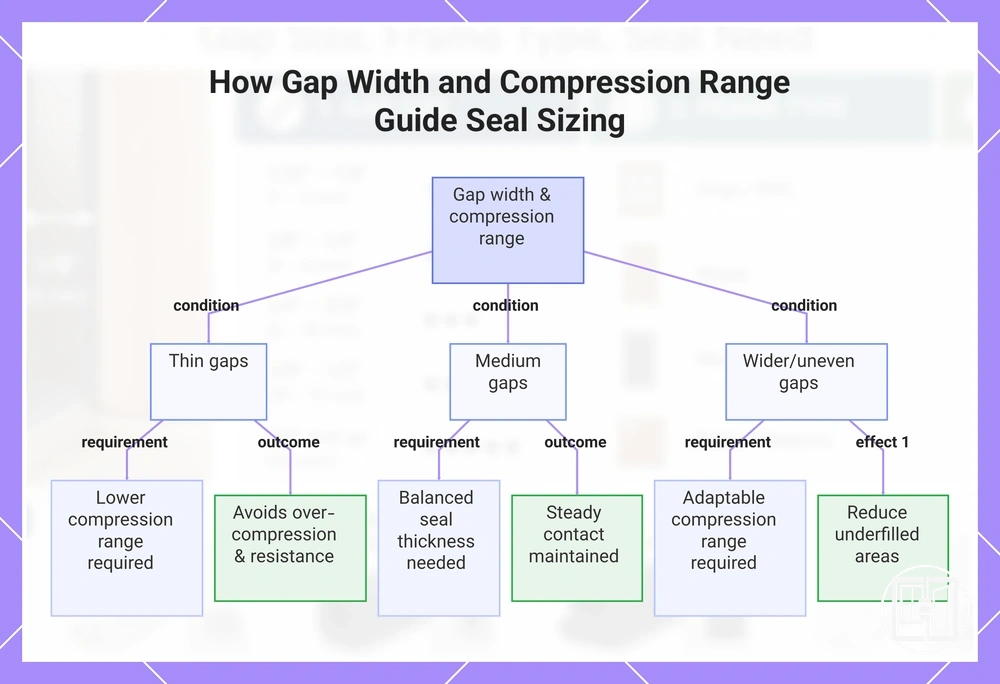
The comparison below shows how gap width and compression range influence sizing outcomes across different conditions:
- Thin gaps: require lower compression range to avoid over-compression and increased closing resistance
- Medium gaps: need balanced seal thickness where compression range supports steady contact
- Wider or uneven gaps: require adaptable compression range to reduce underfilled areas and maintain contact stability
This chart shows how thin, medium, and wider/uneven gap conditions determine compression range requirements and sealing outcomes for weather stripping.
Frame shape and mounting surface
Frame shape and mounting surface determine whether a seal can stay aligned and functional on a window or door system. Frame shape defines the structural profile, while the mounting surface controls how the seal attaches and maintains stable positioning. Alignment depends on how both elements support consistent contact direction and secure placement, making compatibility conditional on surface and profile type.
A flat surface typically supports adhesive-based mounting with alignment depending on surface smoothness and contact direction. A groove or kerf supports insert-style sealing where the frame shape guides positioning and retention. Stops and tracks influence movement paths and restrict alignment options based on structural layout, while worn or heavily painted surfaces may reduce mounting consistency and affect alignment stability.
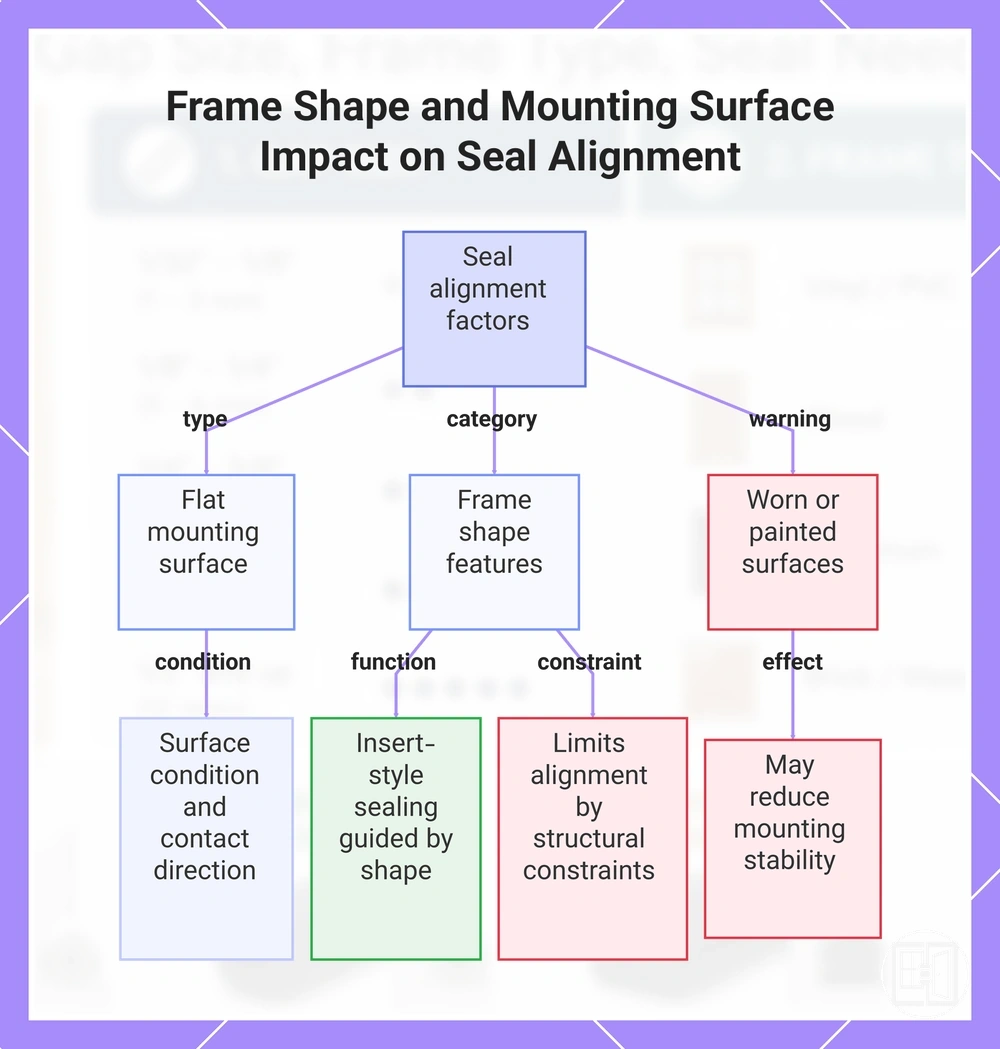
The comparison below highlights how frame shape and mounting surface affect seal compatibility:
- Flat surface: supports adhesive mounting where alignment depends on surface condition and contact direction
- Groove or kerf: enables insert-style sealing guided by frame shape for positioning and retention
- Stop or track: defines movement path and limits alignment based on structural constraints
- Worn or painted surface: may reduce mounting stability and requires careful alignment based on surface condition
This chart compares the four main surface and frame conditions that determine whether a seal can stay aligned and functional on window or door systems.
Door or window movement pattern
Movement pattern determines seal profile because the seal must compress, slide, or sweep without blocking operation across the opening :contentReference[oaicite:0]{index=0}. A mismatched movement pattern can increase sliding friction, alter compression direction, or interfere with closing pressure and clearance. Selection depends on how the seal profile interacts with the operating motion of the system under real use conditions.
A swing door typically creates direct closing pressure where the seal compresses into the frame, while a sliding window relies more on lateral movement along a track. In swing systems, compression direction is more vertical or inward, while sliding systems depend on controlled clearance and reduced friction along the movement path. This difference directly affects which seal profile can maintain alignment during operation.
Movement-based compatibility factors:
- Swing door: higher closing pressure with inward compression direction affecting seal profile choice
- Sliding window: continuous sliding friction along track requiring low-resistance movement compatibility
- Compression direction: determines how seal deforms during swing or slide operation
- Clearance: defines available space for movement without rubbing or blockage
This chart shows how door or window movement pattern (swing vs sliding) affects seal profile selection, highlighting key attributes and compatibility factors.

Matching Seal Types to Fit Conditions
Seal types should be matched to fit conditions rather than chosen based on popularity or general preference. Foam, rubber, silicone, brush seal, compression seal, adhesive-backed, kerf, insert, and screw-on options each respond differently to gap size, surface condition, and movement behavior. The correct choice depends on how well the seal profile aligns with real operating conditions, where fit conditions determine performance more than category labels.
Multiple seal types can fit the same area, but they behave differently depending on compression, mounting surface, and movement stress. Foam may suit flexible low-pressure gaps, while rubber or silicone may perform better under sustained compression. Brush seal options can better support sliding interfaces, while adhesive-backed, kerf, insert, and screw-on types vary in how they interact with surface stability and frame structure. Selection depends on comparing these conditions rather than assuming one universal option per application.
The table below connects seal types to fit conditions and shows how each option behaves under different sealing requirements and movement constraints.
In addition, material differences influence durability expectations, surface interaction, and long-term response under changing conditions, which may affect final selection between similar sealing options.
| Seal type | Fit condition | Surface / movement suitability |
|---|---|---|
| Foam | Small or uneven gaps | Flexible fill under low compression |
| Rubber / Silicone | Moderate to higher compression needs | Stable contact under repeated closing pressure |
| Brush seal | Sliding movement gaps | Reduced friction in tracks and moving panels |
| Adhesive-backed | Flat mounting surfaces | Surface-dependent placement stability |
| Kerf / Insert | Groove-based frame profiles | Mechanically retained within frame structure |
| Screw-on | High-stability mounting needs | Fixed attachment for consistent alignment |
Foam, rubber, silicone, brush, and compression fit cases
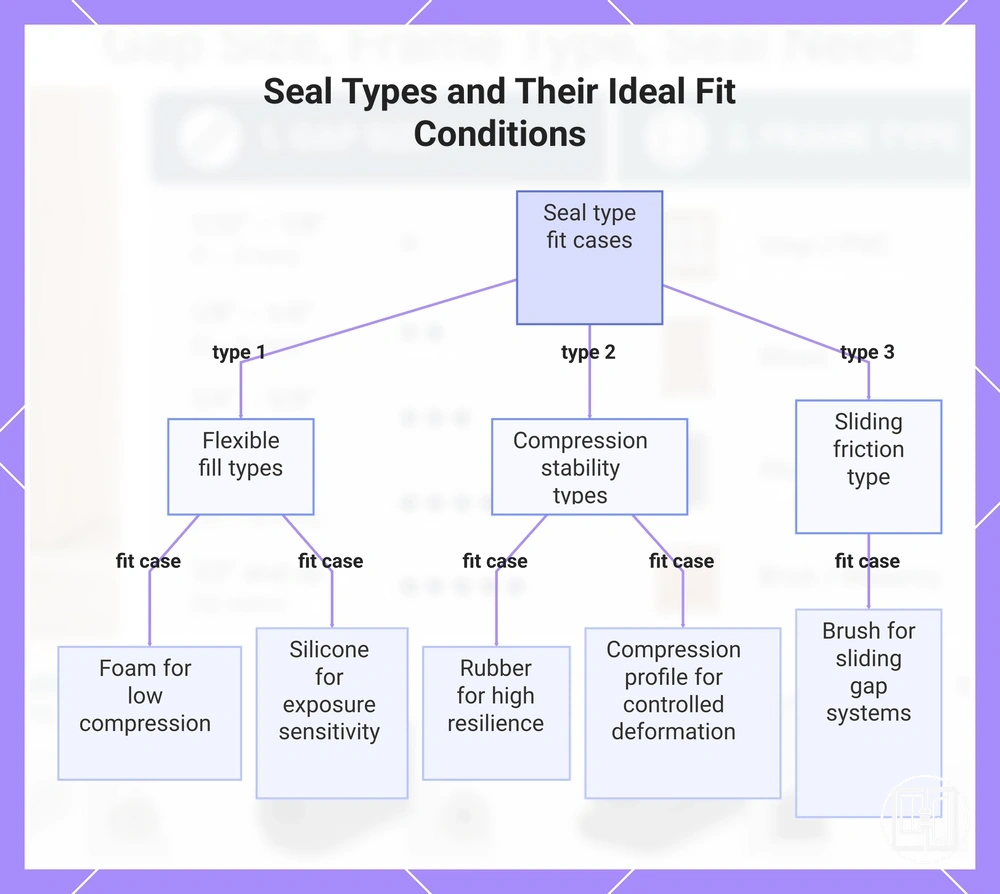
Each of foam, rubber, silicone, brush, and compression profiles fits different conditions based on flexibility, resilience, friction, and contact tolerance. These seal types respond differently to gap behavior and movement pressure, so suitability depends on how the surface and operating motion interact rather than material preference. The bullets below outline fit cases for each option.
- Foam: Fits small or uneven gaps where flexible fill is needed under low compression, with limited resilience under repeated contact pressure.
- Rubber: Fits conditions requiring higher resilience and stable compression, supporting consistent contact tolerance under repeated closing pressure.
- Silicone: Fits exposure-sensitive conditions where flexibility and environmental tolerance matter, while maintaining moderate compression behavior.
- Brush: Fits sliding gap systems where reduced friction is important, especially in track-based movement where contact must not restrict motion.
- Compression profile: Fits applications requiring controlled deformation, balancing compression force with contact tolerance across varying frame pressure conditions.
This chart shows how foam, rubber, silicone, brush, and compression profile seals are selected based on flexibility, resilience, friction, and contact tolerance.
Adhesive, kerf, screw-on, and insert mounting choices
Mounting choice determines how a seal attaches to the frame and how it stays aligned during movement. Adhesive, kerf, screw-on, and insert mounting each respond differently to surface preparation, groove availability, alignment stability, holding strength, and removability, so the fit depends on frame conditions rather than a universal attachment method.
When frame structure limits attachment options, mounting style becomes the main constraint in seal selection. Flat surfaces may support adhesive or screw-on options depending on preparation level, while grooved frames may require kerf or insert compatibility. These constraints guide how alignment and holding strength are achieved, making the mounting choice a direct fit decision factor.
The comparison below outlines how each mounting choice affects fit conditions and attachment behavior.
| Mounting choice | Frame condition | Fit advantage | Caution |
|---|---|---|---|
| Adhesive | Flat, prepared surface | Flexible placement with adaptable alignment | Depends on surface preparation and may vary in removability |
| Kerf | Frame with groove | Guided alignment through groove fit | Requires compatible groove availability |
| Screw-on | Stable, fixed surface | Improved holding strength and alignment stability | Removability may be limited depending on fastening points |
| Insert | Profiled channel or slot | Integrated fit within frame profile | Depends on precise groove or channel compatibility |
Choosing for Common Door and Window Sealing Areas
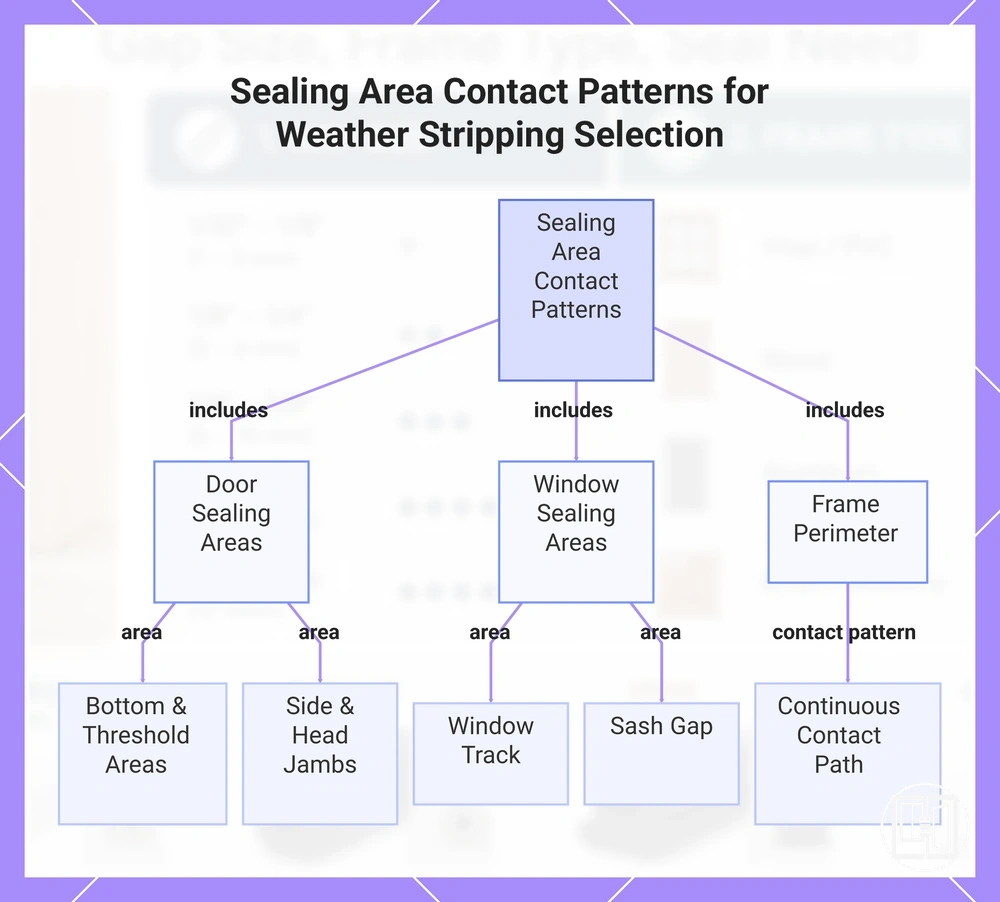
Sealing areas determine suitable weather stripping because contact patterns differ by location. Door and window performance changes depending on whether pressure, clearance, or sliding movement is dominant at each point. This creates an area-based decision frame where selection depends on how each sealing zone behaves under contact conditions :contentReference[oaicite:0]{index=0}.
A draft in a room may come from different sealing areas even when the symptom feels the same. It could originate at the door bottom, around the window track, or through a side jamb gap depending on how the frame is built and used. Because this variation exists, each location must be checked against its own contact pattern before selecting a sealing solution, often aligned with a compatibility guide approach.
The checklist below organizes common sealing areas by contact pattern to support location-based selection.
- Door bottom: direct sweep contact with floor clearance variations influencing compression and gap closure needs
- Threshold: impact-based contact zone where uneven floor alignment affects sealing consistency
- Side jamb: lateral compression area where frame pressure determines seal engagement strength
- Head jamb: overhead compression zone with lighter but consistent contact patterns
- Frame perimeter: continuous contact path where small inconsistencies affect overall sealing continuity
- Window track: sliding contact zone where movement friction defines seal suitability
- Sash / sliding gap: dynamic contact area where shifting alignment changes sealing pressure during operation
This chart organizes common door and window sealing areas by their contact patterns to guide location-based weather stripping selection.
Door bottoms, sweeps, and threshold contact
Door bottom, sweep, and threshold contact require distinct selection because closure behavior depends on clearance, floor transition, and bottom gap conditions. These elements must balance coverage of the bottom gap with controlled movement so the door can close without drag risk or blocked closure. Selection depends on maintaining suitable clearance across the threshold and floor transition.
In cases where the floor transition varies or the bottom gap is uneven, sweep contact and threshold contact may behave differently along the door bottom. This can increase drag risk or affect closure consistency even when coverage appears sufficient. The decision therefore depends on evaluating clearance and contact conditions before final selection.
The key selection factors for door bottom and threshold contact are:
- Clearance: defines spacing between door bottom and threshold, directly affecting closure movement and fit condition
- Threshold contact: controls how consistently the seal engages with the threshold surface during closure
- Sweep contact: influences interaction with floor surfaces and may increase drag risk depending on contact pressure
- Floor transition: affects alignment changes that can shift sealing behavior across the opening
- Bottom gap coverage: determines how completely the lower opening is covered while maintaining smooth closure
Side jambs, head jambs, and frame perimeter seals
Side jamb, head jamb, and frame perimeter seals depend on continuous contact across the latch-side gap, hinge-side gap, and top gap. These sealing zones require consistent engagement with stop contact along the side frame and top frame to maintain stable performance. Selection is driven by continuous alignment across the frame perimeter rather than isolated contact points.
Perimeter sealing must be evaluated by checking how each section of the frame maintains contact under closure conditions.
- Side jamb (latch-side gap): checks compression consistency where the latch-side gap influences seal selection and alignment behavior
- Side jamb (hinge-side gap): evaluates uneven contact where hinge-side variation may require adaptive sealing response
- Head jamb (top gap): assesses overhead contact uniformity to maintain consistent sealing across the upper frame
- Frame perimeter (stop contact): verifies how effectively the seal engages with stop contact along the full perimeter
- Continuous alignment: determines whether the entire frame perimeter maintains stable sealing continuity during closure
Window tracks, sashes, and sliding frame gaps
Window track, sash, and sliding frame gap compatibility depends on maintaining movement clearance while managing friction across sliding surfaces. The window track and sash need seal profiles that preserve clearance so the system does not bind during movement, while sliding frame gap behavior influences how compression direction can be applied without increasing sliding resistance. Compatibility is therefore linked to track space, clearance, and friction control.
When a seal is oversized for the available track space, the sash may begin to bind during sliding movement, increasing sliding resistance and reducing smooth operation. This typically indicates that the sliding frame gap cannot support both sealing contact and free movement, especially when compression direction conflicts with the track layout.
- Track space: determines how much seal material can fit without reducing clearance or causing binding
- Sash contact: evaluates how the sash interacts with the seal during repeated sliding movement
- Sliding resistance: indicates friction changes when seal density or size exceeds available clearance
- Compression direction: defines how the seal deforms relative to horizontal sliding motion in the window track
- Removable strip tolerance: affects whether the seal can be adjusted or replaced without disrupting alignment
Best-Fit Logic for Drafts, Rattling, and Uneven Contact
Drafts, rattling, and uneven contact function as selection clues rather than certain diagnoses for weather stripping. Each symptom points toward a possible fit condition, but does not confirm a fixed cause or guaranteed outcome. These signals help guide selection decisions where seal thickness, compression behavior, and mounting stability must be balanced carefully.
Drafts often relate to a draft path or uneven gap, rattling often indicates loose contact or panel movement, and uneven contact can suggest inconsistent pressure zones across the frame. These are fit symptoms that point toward selection conditions rather than repair certainty. Overcorrecting based on a single symptom can create new issues in movement or sealing balance.
The decision block below organizes symptom-based interpretation into selection logic.
| Symptom | Likely fit condition | Check | Selection response | Risk if overcorrected |
|---|---|---|---|---|
| Drafts | Draft path or gap leakage | Airflow points and gap continuity | Adjust seal thickness and compression behavior | May restrict movement or over-tighten closure |
| Rattling | Loose contact or panel movement | Stability during operation | Improve mounting stability and contact support | May increase friction and reduce smooth movement |
| Uneven contact | Uneven gap or pressure variation | Contact variation across frame | Select more flexible sealing response | May overcompress tight zones |
Thicker seals may reduce drafts but can increase resistance if compression behavior is not balanced. More flexible seals may reduce rattling but can underperform in uneven contact zones. Different mounting stability approaches can improve balance but must match clearance conditions.
Drafts, rattling, and uneven contact should be treated as selection signals that guide fit decisions rather than fixed problems with single solutions
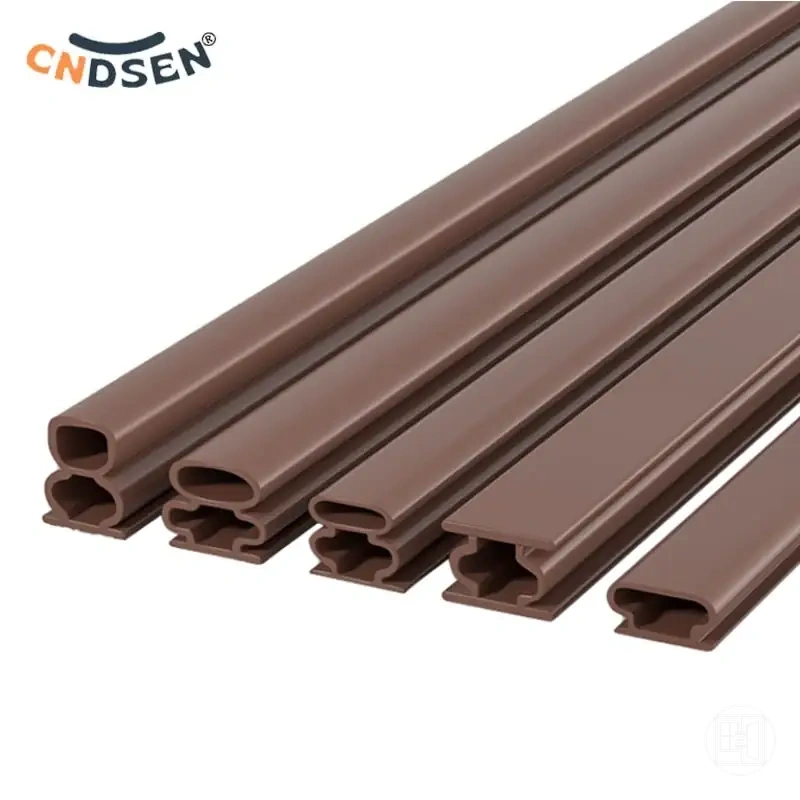
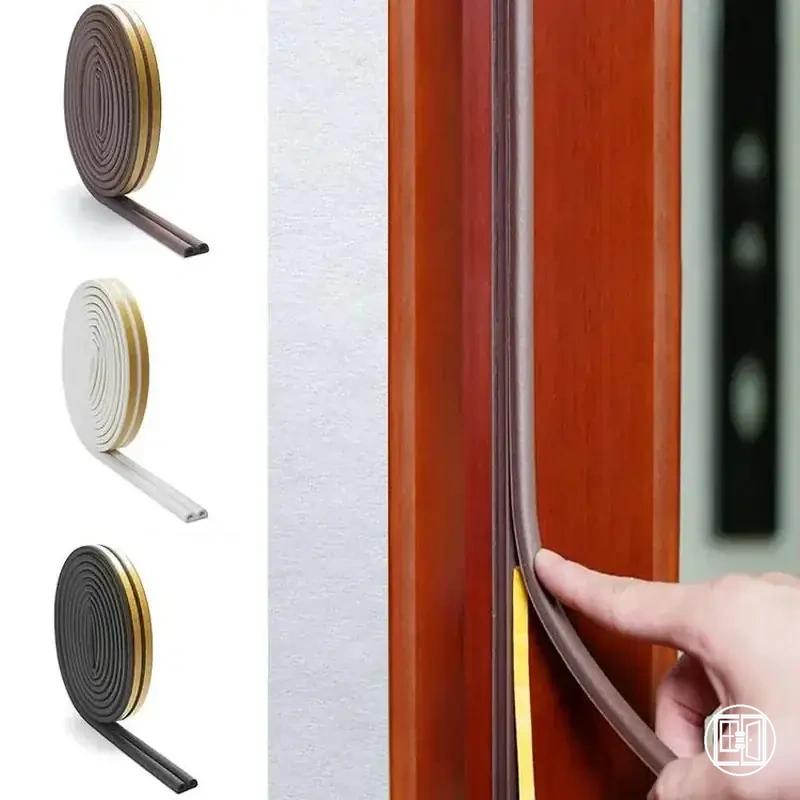
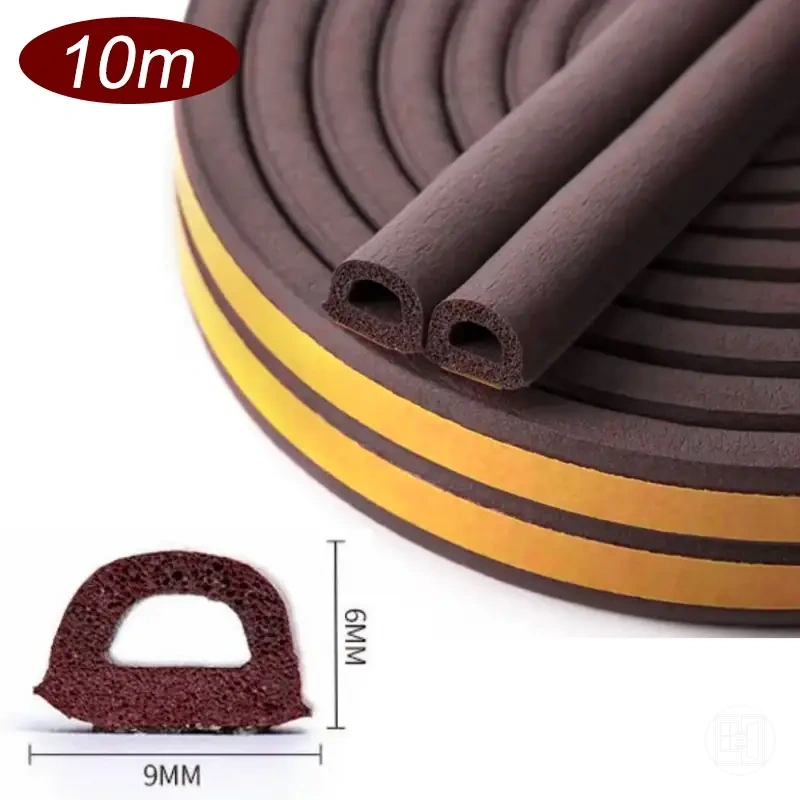
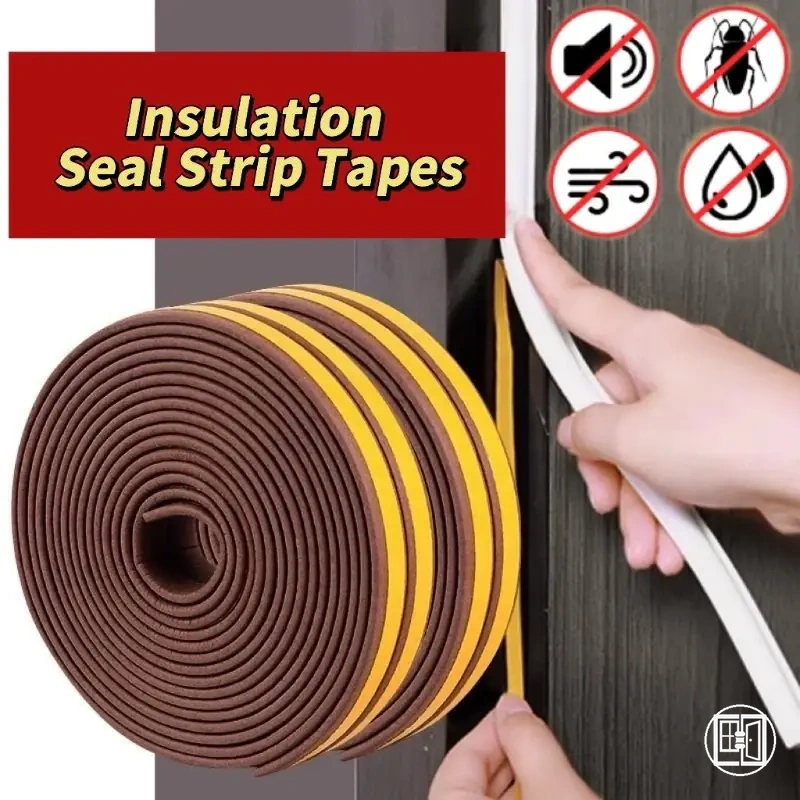
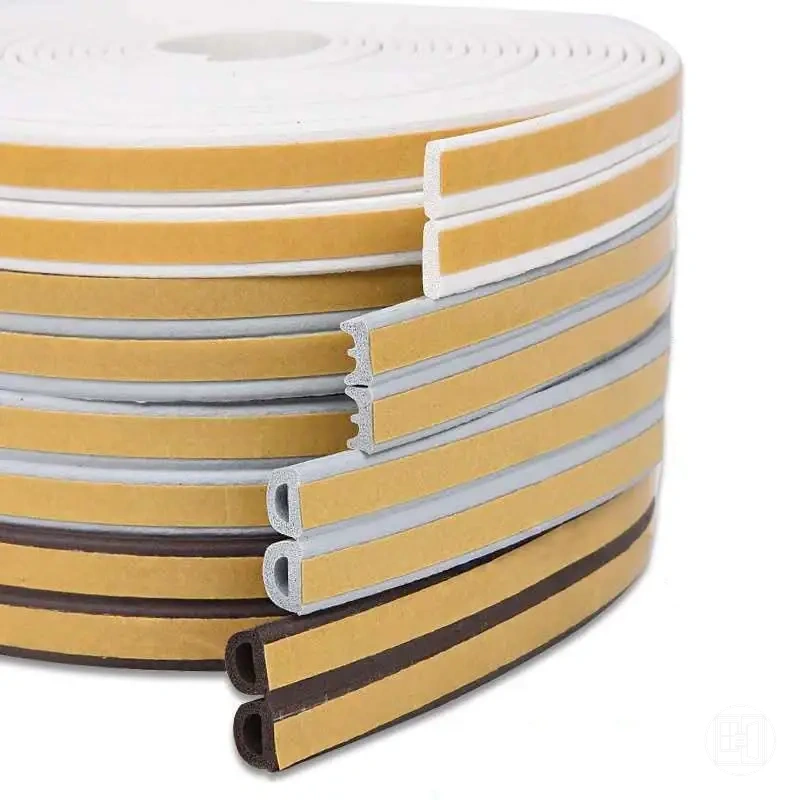
The products below are useful examples for comparing available options. Before buying, check that the compatibility criteria, key features, and product details match your needs.
Selection Mistakes That Lead to Poor Sealing
Poor sealing often comes from selection mistakes where the strip is mismatched to the gap, surface, or movement conditions rather than a fault in the weather stripping itself. In many cases, drafts, contact issues, and movement changes reflect a selection error pattern rather than a single product issue. This framing helps keep the focus on correction logic instead of assuming a fixed defect.
Common selection mistakes include over-thick strips that increase closing resistance, underfilled gaps that allow draft path formation, weak surface match that reduces mounting stability, wrong movement profile that conflicts with panel movement, uneven gaps that disrupt compression behavior, and adhesive reliance on unsuitable surfaces. These selection mistakes often interact, and correction depends on aligning fit conditions rather than forcing one adjustment.
The checklist below organizes selection mistakes into condition-based correction logic.
| Mistake | Why it hurts fit | Better selection response |
|---|---|---|
| Over-thick strips | Can increase closing resistance and over-compression | Adjust seal thickness to match clearance and compression behavior |
| Underfilled gaps | Can create draft path and insufficient contact | Revise thickness to improve coverage without blocking movement |
| Weak surface match | Reduces mounting stability and holding reliability | Match mounting type to surface condition |
| Wrong movement profile | Interferes with panel movement and friction balance | Select seal based on movement direction and clearance needs |
| Uneven gaps | Disrupts compression behavior across contact zones | Use more adaptive or flexible sealing response |
| Adhesive reliance | Fails on unsuitable or unstable surfaces | Switch to mechanically supported mounting option |
A thicker seal may reduce drafts but can increase resistance if compression behavior is not balanced. Flexible responses may reduce rattling or uneven contact but can underperform when gaps vary significantly. Mounting changes can improve stability, but only when matched with surface conditions and movement profile.
Selection should always be revised by correcting the mismatch between seal behavior and frame conditions, avoiding overcorrected adjustments that create new sealing issues
The products below are useful examples for comparing available options. Before buying, check that the compatibility criteria, key features, and product details match your needs.