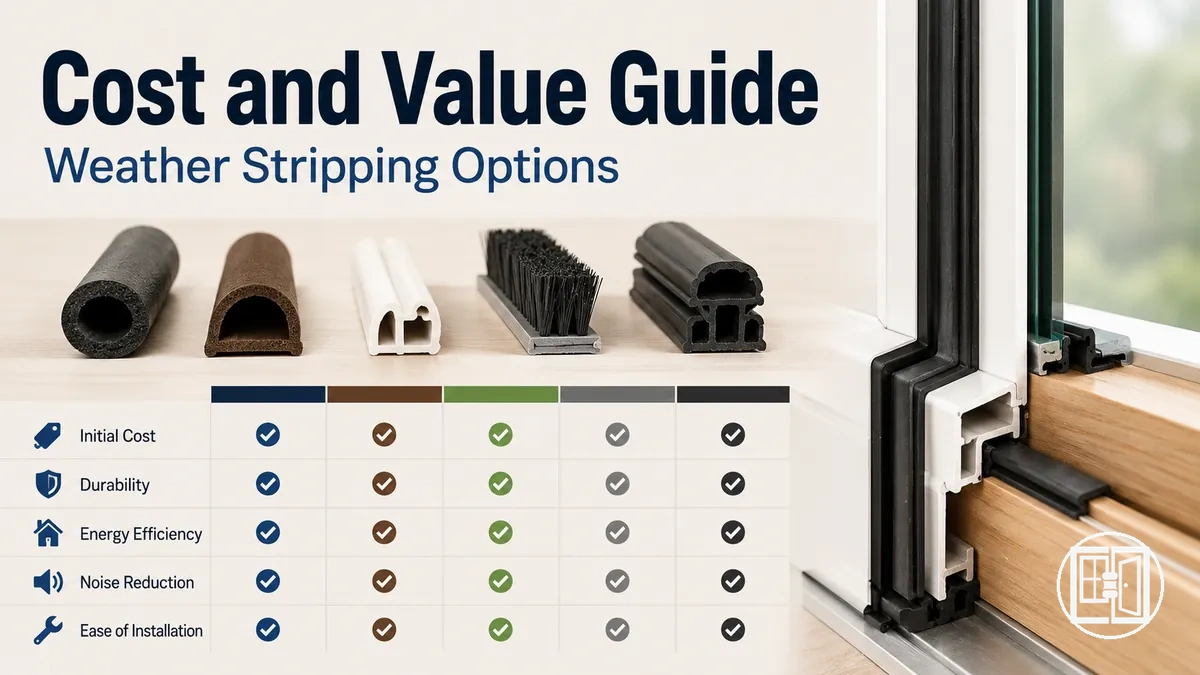
Window and door weather stripping cost and value guide
Weather stripping is a seal used around doors and windows to reduce gaps where air, dust, or outdoor conditions may pass through the frame. This guide frames weather stripping cost as a value decision, not only a price decision, because the result depends on gap fit, material durability, draft reduction, replacement frequency, and installation cost.
A low-cost door seal or window seal can be useful when the gap is simple, the frame condition is stable, and seasonal use is limited. A more durable seal strip may offer better long-term value when the opening is used often, the material must compress repeatedly, or the draft gap needs a stronger fit. Low upfront price and long-term value are not the same outcome. The better choice depends on the door or window use case, material behaviour, and how well the seal matches the gap.
Higher-priced weather stripping can be worth it when the material, fit, and installation path reduce repeated replacement or poor sealing. Weather stripping value usually improves when the seal holds its shape, fits the frame without blocking movement, and supports draft reduction under normal use. A higher cost is harder to justify when the same sealing need can be solved with a simpler adhesive seal or insulation strip. The next decisions should compare price ranges, project size, and cost factors before treating price alone as the main signal.
Poor value often comes from matching the wrong seal to the wrong gap, not from choosing the lowest or highest price. Later comparisons should be read as condition-based guidance: cost, fit, durability, and sealing outcome need to work together. The goal is to choose weather stripping that suits the opening and use case without treating price as the only decision frame.
Weather stripping price ranges for doors and windows
Weather stripping price ranges for doors and windows depend on material type, linear length, opening size, and installation path. A realistic weather stripping cost estimate separates material cost from installed cost because labour, preparation, and fit adjustment can change the budget effect.
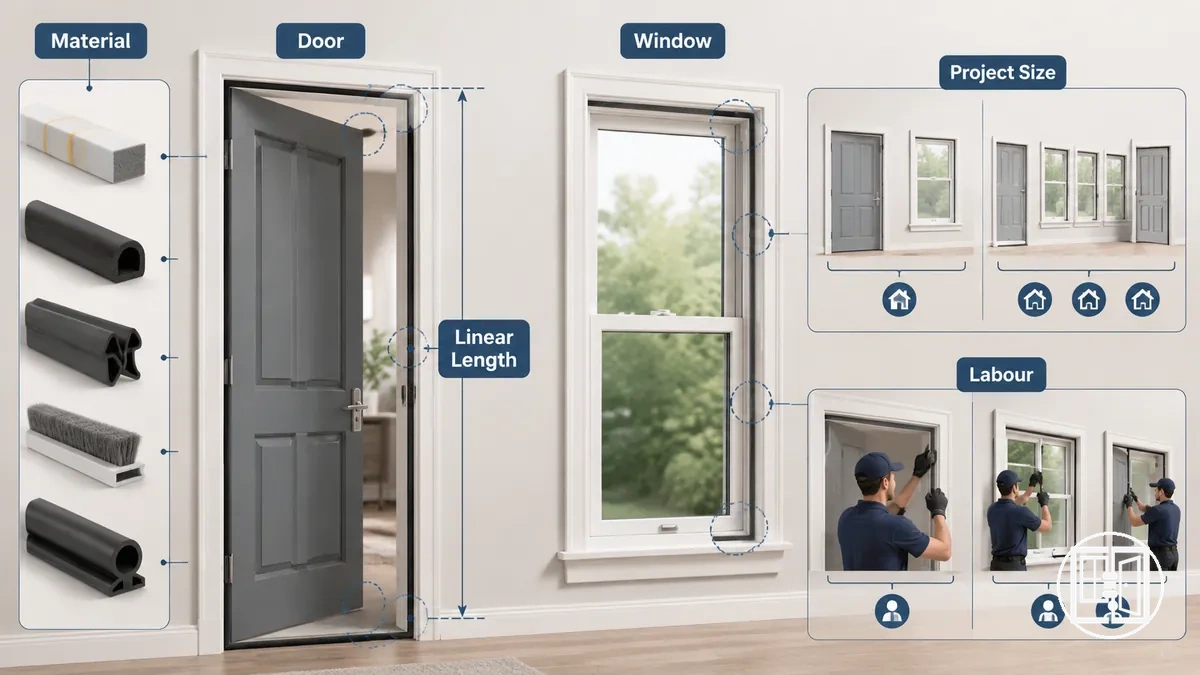
A single door usually has a different price range logic than a single window because the seal location, strip quantity, and wear pattern may differ. A multi-opening project can raise project size and total linear length, even when each individual seal strip is simple. The useful comparison is not one universal price point, but how each cost driver changes value for the specific door or window.
| Cost driver | What changes | Value effect | Qualification |
|---|---|---|---|
| Material type | Foam, rubber, vinyl, silicone, or similar seal materials may differ in durability and compression | Material cost can be lower or higher depending on how long the seal needs to perform | Value depends on gap fit, exposure, and use frequency |
| Linear length | Longer door or window edges require more sealing tape or strip material | Total weather stripping cost usually rises as measured length increases | Waste allowance and cutting accuracy can affect the final quantity |
| Opening size | A single window, one exterior door, or multiple openings may need different quantities and profiles | Project size can make a low material cost add up across the home | Cost expectations should be separated by single-door, single-window, and multi-opening work |
| Installation path | DIY fitting mainly changes material and tool needs, while installed cost can include labour and preparation | Labour may add value when surface preparation or fit adjustment affects sealing outcome | Professional work is not automatically better; the need depends on frame condition and complexity |
Material-only cost versus installed cost
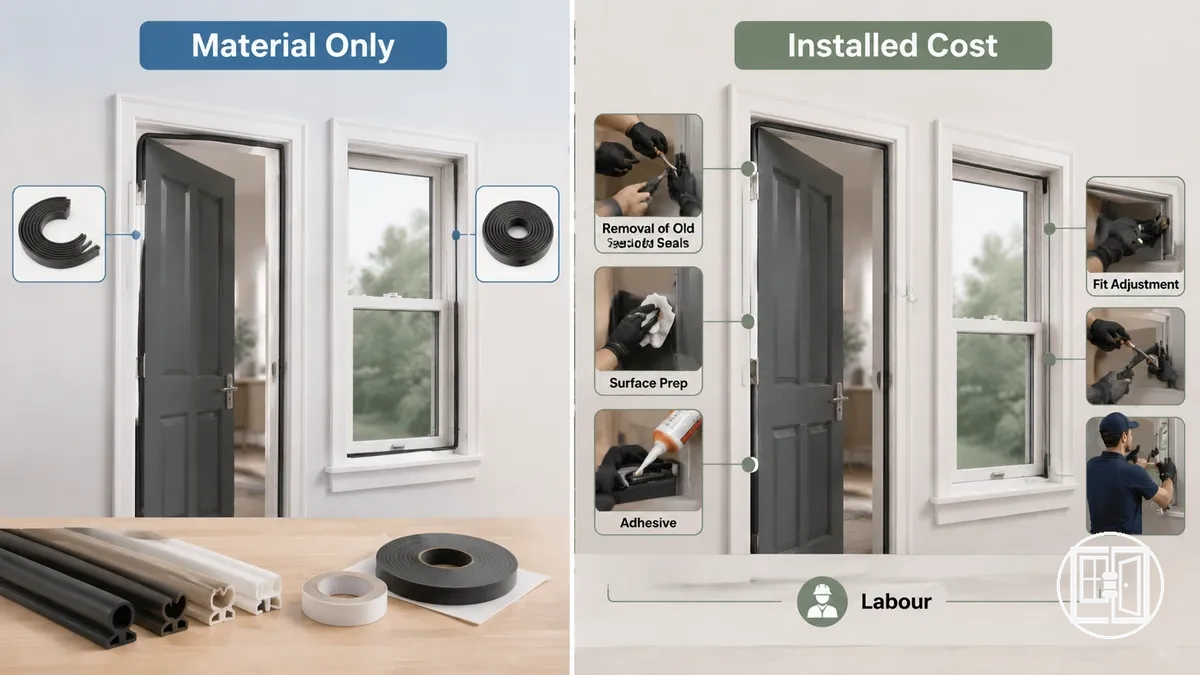
Material-only cost versus installed cost compares two different spending scopes. Material-only cost covers the weather stripping itself, including the seal strip, adhesive type, and required length, while installed cost may also include labour, surface preparation, removal of old seals, and fit adjustment. The better value depends on the condition of the frame and the work needed to achieve an effective seal.
| Material-only cost | Installed cost |
|---|---|
| Includes the weather stripping material, adhesive type, and the required seal length. | May include labour, surface preparation, removal of old seals, and fit adjustment in addition to the weather stripping material. |
| May suit straightforward DIY work when the frame is clean and the gap is simple to seal. | Labour may be worthwhile when difficult frames, larger gaps, or repeated seal failure require additional preparation or adjustment. |
DIY is not automatically the lower-cost option, and professional installation is not automatically the better choice. Comparing the work involved, rather than the price alone, can provide a more useful basis for deciding whether material-only cost or installed cost offers better value for a particular door or window.
Door, window, and whole-home project sizing
Door, window, and whole-home project sizing depends on opening count, total linear length, and whether doors or windows require different seal types. Weather stripping cost usually changes as strip quantity increases, so estimating project sizing before choosing materials helps set more realistic expectations. The overall value depends on the amount of sealing required across the property.
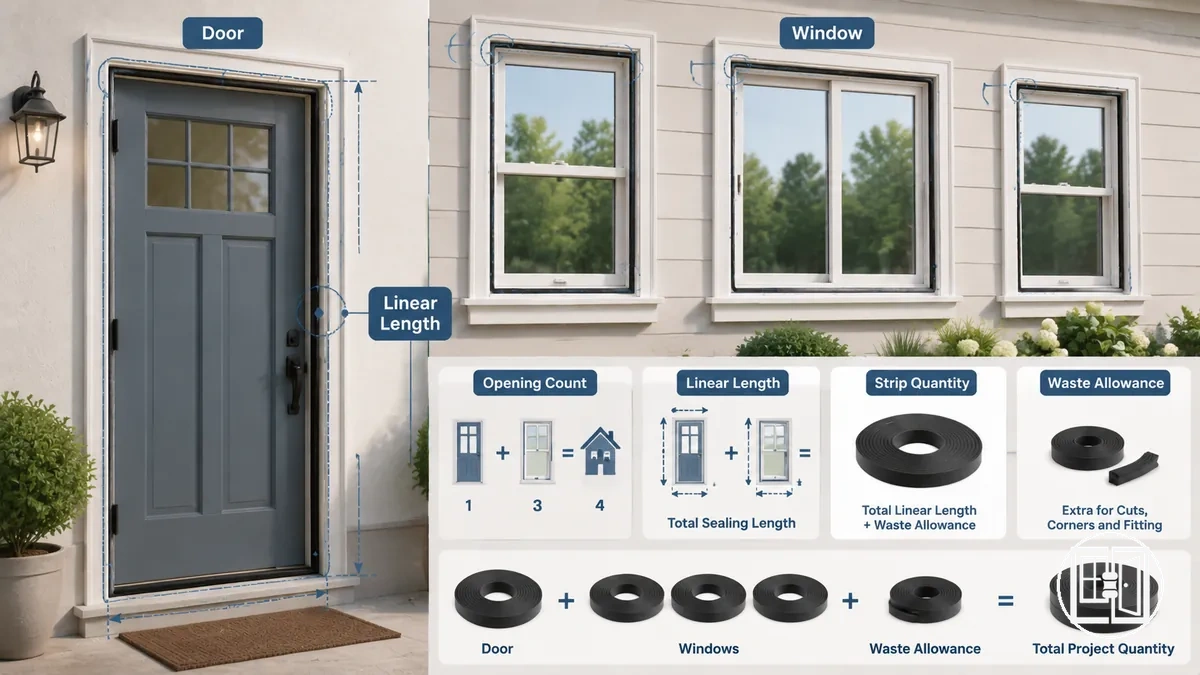
Door, window, and whole-home project sizing can be checked with the following points before estimating material needs or project scale:
- Count every door and window opening because opening count directly affects strip quantity and the overall project scale.
- Measure the linear length around each opening so the seal strip or sealing tape matches the required coverage.
- Include a waste allowance because trimming and fit adjustments can increase material usage.
- Check whether different opening types require different seal types, as this may influence the total cost.
- For example, sealing one exterior door may require less strip quantity than sealing multiple windows, even if each window uses a shorter length of insulation strip.
Cost factors that change weather stripping value
Cost factors that change weather stripping value depend on how well the weather stripping matches gap size, frame condition, seal location, material resilience, compression behavior, and sealing demand. Practical value usually improves when these conditions are evaluated together instead of focusing on purchase cost alone. The most useful choice depends on how the seal performs in the intended installation.
Cost factors that change weather stripping value become easier to compare when each condition is assessed separately. A narrow gap may require a different sealing approach than a wider or uneven opening, while a frequently used door can place different demands on a seal than a less-used window. The table below summarises the main criteria that can influence long-term value.
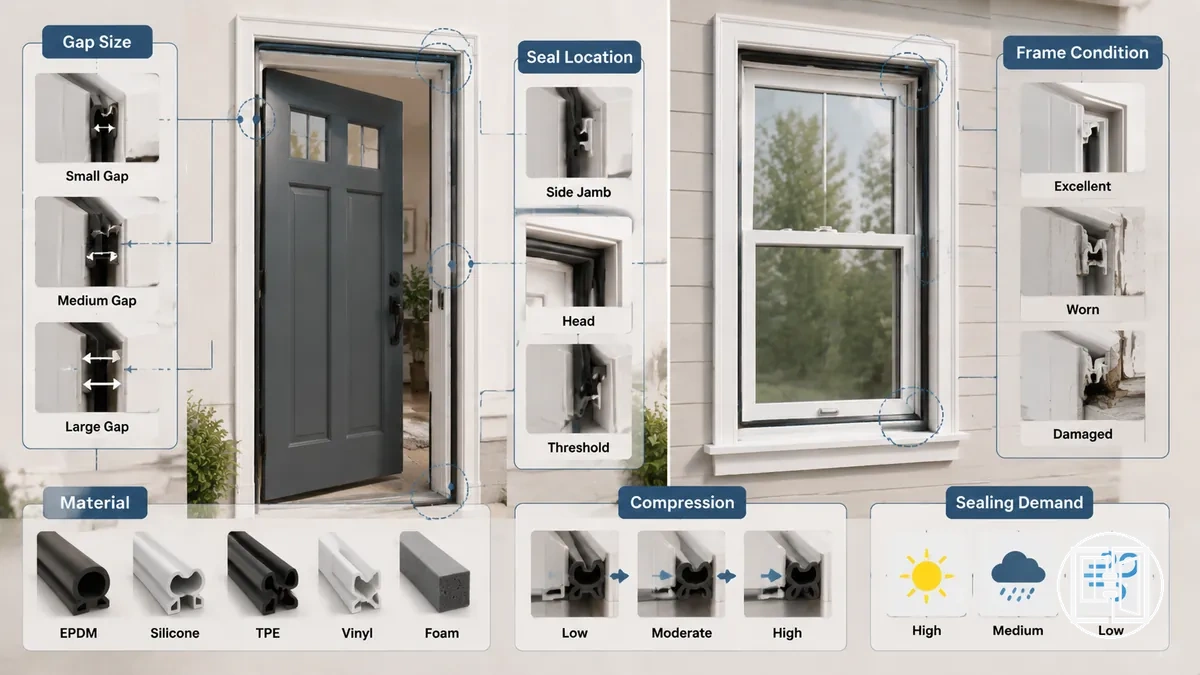
| Use case | Key criterion | Value condition | Decision signal |
|---|---|---|---|
| Uneven frame | Frame condition | Value depends on how well the seal strip conforms to the surface. | Consider a sealing solution suited to irregular contact areas. |
| Wide or changing gaps | Gap size | Sealing performance depends on matching the seal to the opening. | A different seal profile or material may be more appropriate. |
| Frequently used door | Material resilience | Repeated compression behavior can increase replacement risk over time. | Choose materials intended for repeated opening and closing. |
| Exposed seal location | Seal location | Exposure and movement can influence long-term sealing value. | Select a seal suitable for the installation environment. |
| Higher sealing demand | Compression behavior | Consistent compression may improve sealing when the fit is appropriate. | Balance material characteristics with expected use and sealing demand. |
Gap size, frame condition, and seal location
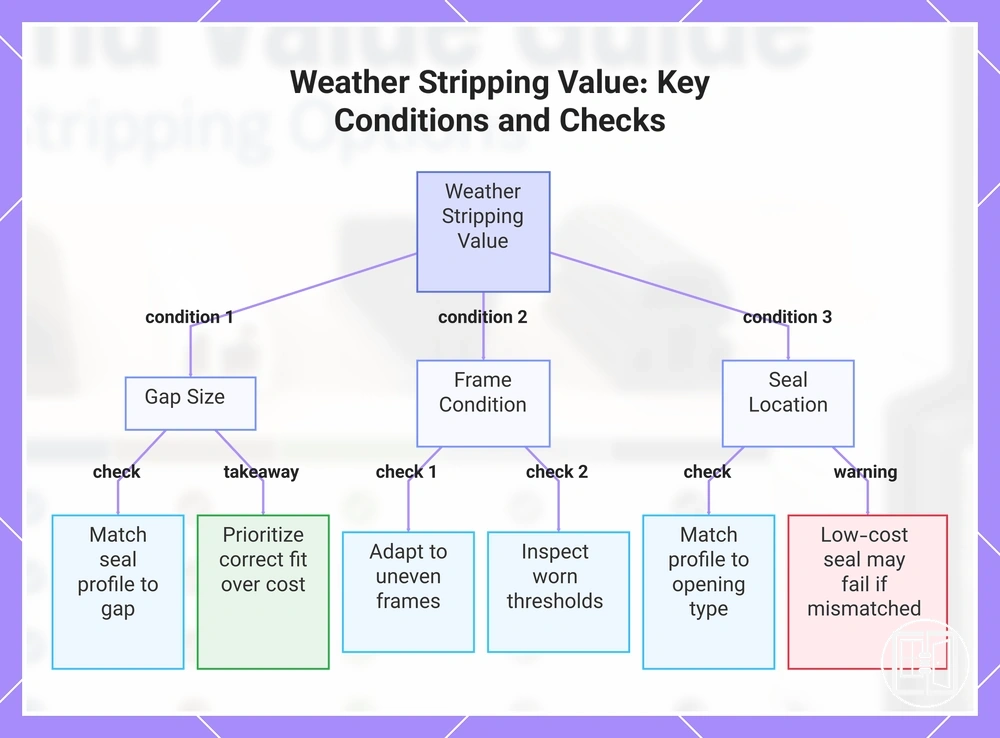
Weather stripping value depends on how well the seal matches the gap, frame condition, and seal location. A weather stripping material that suits one door or window may provide lower value in another opening if the fit does not allow proper compression or consistent draft sealing. Cost is worthwhile only when the seal matches the local installation conditions.
Gap size, frame condition, and seal location determine whether the seal can compress correctly and maintain effective contact. Check these compatibility conditions before choosing a weather stripping option:
- Match the gap width to the seal profile so the weather stripping can compress without excessive pressure or loose contact.
- Check for uneven frames because changing contact points may require a seal that adapts to surface variation.
- Inspect worn thresholds, as they can reduce sealing effectiveness even when the seal material remains suitable.
- Consider whether the opening uses sliding tracks, hinged doors, or window sashes because each seal location may require a different profile or installation approach.
A low-cost seal strip can fail the value check if the material thickness or profile does not match the opening. Correct fit is often a more important factor than purchase cost when evaluating weather stripping value.
This chart shows the three main conditions that determine weather stripping value and the specific checks to ensure compatibility.
Material durability and compression performance
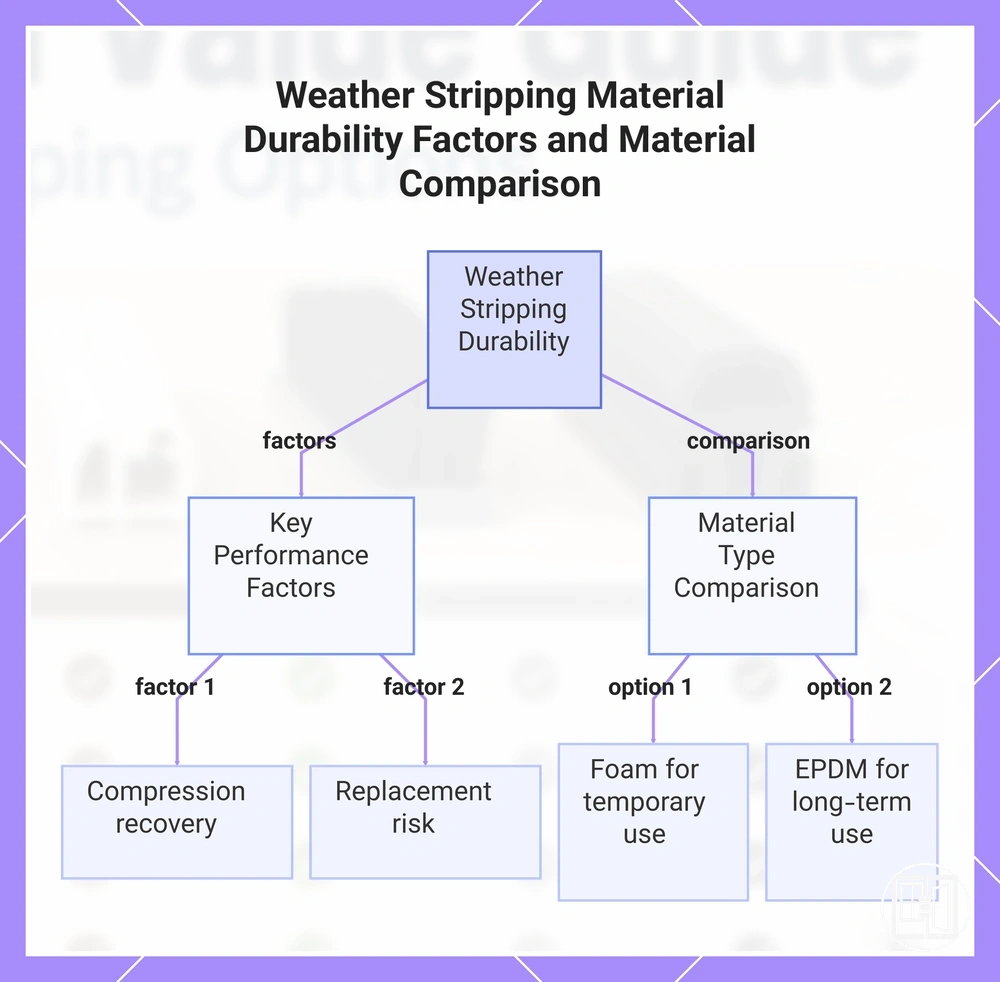
Material durability and compression performance determine how well weather stripping maintains a seal over time. Weather stripping cost may represent better long-term value when the material keeps an effective fit, recovers after compression, and continues to reduce drafts under normal use. Replacement risk depends on the material, the installation conditions, and how frequently the seal is compressed.
Durability and compression recovery influence how long a seal keeps working. Consider these material attributes when comparing weather stripping options:
- Foam: May suit temporary or seasonal draft sealing where wear is limited, but repeated compression can increase replacement risk.
- Rubber: Often provides durable compression recovery for regularly used doors and windows when the seal matches the gap.
- Silicone: May retain flexibility under repeated use, making it suitable to consider for high-use doors or exposed frames.
- Vinyl: Performance depends on installation conditions, wear, and whether the seal profile matches the opening.
- EPDM: Can provide durable sealing performance where repeated compression and long-term material resilience are important value considerations.
This chart explains the key factors affecting weather stripping durability and compares foam for temporary use with EPDM for long-term sealing.
Cheap versus premium weather stripping value
Cheap versus premium weather stripping value depends on durability, sealing force, fit tolerance, and replacement cycle rather than price alone. Cheap weather stripping may provide sufficient value for simple gaps or temporary seasonal sealing, while premium weather stripping may justify its higher cost when repeated compression, demanding conditions, or longer service life reduce replacement frequency. The better choice depends on how the seal matches the installation conditions.
Cheap versus premium weather stripping value becomes clearer when the options are compared by the conditions in which each is likely to provide better value.
| Option | Cost driver | Trade-off | Best use case |
|---|---|---|---|
| Cheap weather stripping | Lower material cost | May wear sooner or require a shorter replacement cycle under frequent use | Simple gaps, temporary seasonal sealing, or lower-use openings |
| Premium weather stripping | Higher material cost | May provide greater durability, sealing force, and fit tolerance when installation conditions are more demanding | High-use doors, exposed frames, or situations where reducing repeated replacement is a priority |
A low-cost seal strip can represent better value when long-term durability is not the primary requirement. Premium weather stripping may provide better value when higher wear or repeated compression increases replacement risk. Comparing performance vs cost can help determine which option better matches the expected replacement cycle and installation conditions.
Budget foam, felt, and vinyl strip trade-offs
Budget foam, felt, and vinyl weather stripping can provide good value when the gap, exposure, and use frequency are modest. Weather stripping cost is only one part of the decision because material choice, seal fit, and draft conditions can influence replacement risk. Budget foam, felt, and vinyl strip trade-offs are easier to compare when each material is matched to its intended use.
Budget foam, felt, and vinyl strip trade-offs are summarised below to show how each material performs under different conditions.
| Item | Attribute | Condition | Effect |
|---|---|---|---|
| Foam | Compressible and low cost | Temporary sealing, simple gaps, or seasonal draft reduction | May provide good value where wear and repeated compression are limited |
| Felt | Basic draft seal with modest durability | Low-use windows or lightly used openings | Can be cost-effective when exposure and movement are minimal |
| Vinyl | More structured seal profile | Simple door draft reduction where the fit matches the opening | May offer better wear resistance than softer budget materials in suitable conditions |
Rubber, silicone, and EPDM value conditions
Rubber, silicone, and EPDM weather stripping can justify a higher cost when exposure, compression recovery, and expected service life place greater demands on the seal. The value of these materials depends on how well the material matches the gap, fit, and frequency of use rather than on price alone. Rubber, silicone, and EPDM value conditions become clearer when each material is compared by its intended application.
Rubber, silicone, and EPDM value conditions are compared below to highlight when a higher-resilience material may provide better value.
| Material | Durability attribute | Use condition | Value justification |
|---|---|---|---|
| Rubber | Good compression recovery | Frequently used exterior doors or regularly compressed seals | May reduce replacement risk when repeated opening places greater demands on the seal |
| Silicone | Flexible with resistance to weather exposure | Exposed locations or larger gaps where flexibility supports seal fit | May provide better value when weather conditions and repeated compression are important considerations |
| EPDM | Resilient synthetic rubber for outdoor use | Exterior installations where weather exposure and repeated use are priorities | Can justify a higher material cost when sealing conditions are more demanding |
Door sealing strip value by use case
Door sealing strip value depends on matching the seal to the door location, movement, draft gap, and expected wear rather than choosing the lowest-cost option. A door sealing strip that fits the door side, threshold, or door bottom correctly may provide better value because the seal can compress as intended during normal use. The most cost-effective choice depends on exposure, compression, and how frequently the exterior door is opened and closed.
Door sealing strip value by use case becomes easier to judge when each sealing location is evaluated separately. A simple draft gap on a lightly used door may only require a basic seal strip, while larger gaps, repeated compression, or greater exterior exposure may justify a more resilient material. Thresholds, door bottoms, and door sides can each require different sealing characteristics because contact patterns and wear differ.
Door sealing strip value by use case is summarised below to compare common selection criteria.
| Use case | Key criterion | Value condition | Decision signal |
|---|---|---|---|
| Door side and jamb | Gap pattern and seal fit | A consistent gap may suit a simpler seal strip | A basic option may be sufficient when wear and movement are modest |
| Threshold | Contact with the door bottom | Repeated compression can increase wear | A more resilient seal may provide better value under frequent use |
| Door bottom | Draft intensity | Larger draft gaps may require a stronger sealing approach | Choose a seal that matches the gap rather than cost alone |
| Exterior door | Exposure and opening frequency | Weather exposure and regular movement can increase sealing demands | Higher-resilience materials may justify their cost in demanding conditions |
| High-use door | Compression and wear | Frequent opening can increase replacement risk | Consider materials designed for repeated compression when long-term value is the priority |
Door sides, thresholds, and door bottoms
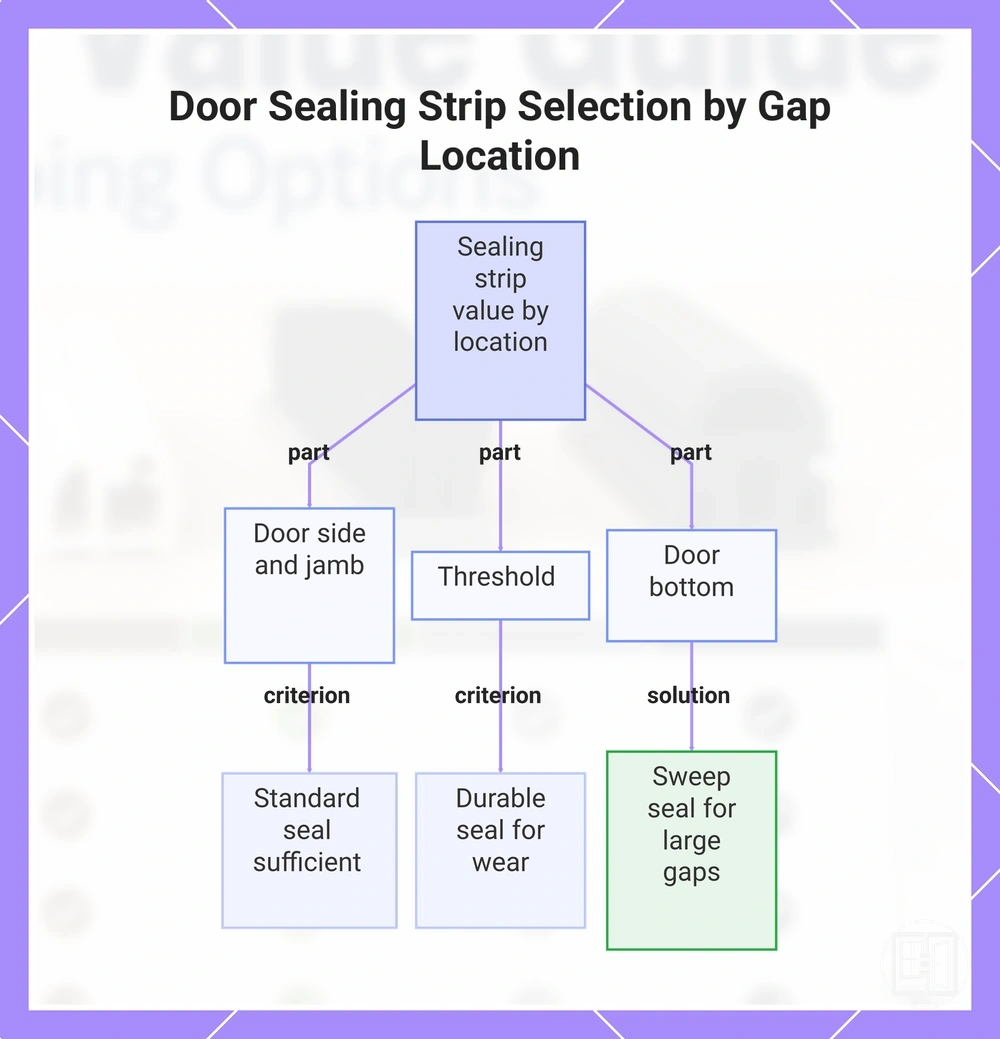
Door sealing strip value depends on where the draft gap occurs because door sides, thresholds, and door bottoms usually require different sealing profiles and cost expectations. A door sealing strip should be selected according to the gap pattern, expected wear, and compression at each part of the exterior door rather than by price alone. The most cost-effective choice depends on matching the seal to the location of the air leak.
Door sides, thresholds, and door bottoms can be checked with the following criteria before comparing weather stripping value.
- Door side and jamb: A consistent draft gap may suit a standard seal strip when even compression can be maintained along the frame, making a simpler option sufficient in many cases.
- Threshold: Repeated contact and wear can place greater demands on the seal, so a more durable sealing solution may provide better long-term value.
- Door bottom: Larger draft gaps often benefit from a door bottom sweep or similar draft seal because the sealing pattern differs from the door side.
- Exterior door: Frequent opening, weather exposure, and repeated compression can increase wear, making material resilience a more important selection criterion.
- Local example: A door bottom sweep and a side jamb strip should not be assessed by the same value criteria because the sweep seals beneath the door, while the side strip relies on compression against the frame.
This chart shows the key criteria for selecting a door sealing strip based on the location of the air leak: door sides, threshold, and door bottom.
High-use exterior doors and larger draft gaps
High-use exterior doors and larger draft gaps depend on a door sealing strip that can match greater wear, compression, and exposure. Repeated opening, wider draft gaps, and changing weather conditions can reduce the value of a lower-resilience seal when consistent contact becomes harder to maintain. The appropriate choice depends on the demands placed on the exterior door rather than on price alone.
High-use exterior doors and larger draft gaps can be evaluated using these compatibility conditions:
- Use frequency: Frequent opening can increase compression cycles, making durability a more important value consideration.
- Exposure: Exterior door locations may require a seal strip that better suits weather exposure than protected interior openings.
- Gap depth: A larger draft gap may require a sealing profile with a wider compression range than a narrow door side gap.
- Attachment strength: Repeated movement can place greater stress on the seal, so secure attachment may improve long-term value.
- Boundary: A higher-priced door sealing strip is justified only when door condition, gap size, wear, or compression demands stronger sealing performance than a simpler option may provide.
Window insulation strip value by use case
Window insulation strip value by use case depends on window gap, sash movement, seasonal sealing needs, and how long the seal is expected to remain in place. A window insulation strip that suits a fixed window gap may provide less value on an operable window if it restricts sash movement or is difficult to remove. The most suitable choice depends on balancing draft sealing with the way the window is used.
Window insulation strip value by use case becomes easier to compare when window function and sealing requirements are considered together. Seasonal sealing, adhesive performance, removability, and strip visibility can all influence practical value, especially where windows need to open normally or temporary sealing is preferred. The table below summarises the main selection criteria.
| Use case | Key criterion | Value condition | Decision signal |
|---|---|---|---|
| Movable window | Sash movement | Draft sealing should allow normal window operation when regular opening is required. | Choose a seal strip that suits repeated sash movement. |
| Fixed window gap | Gap consistency | A consistent window gap may suit a longer-term insulation strip. | Consider solutions intended for ongoing draft sealing. |
| Seasonal draft control | Removability | Temporary sealing may provide better value when easy removal is expected. | Adhesive performance and removability become important selection factors. |
| Rental property | Adhesive tolerance | Lower adhesive residue may be preferable when the strip is intended for later removal. | Consider whether the insulation strip supports easier removal. |
| Window that must open normally | Draft sealing and visibility | The strip should balance draft sealing with everyday window use. | Avoid options that may interfere with normal sash movement. |
Movable window gaps and seasonal sealing needs
Movable window gaps and seasonal sealing needs change weather stripping value because the window insulation strip must match both the window gap and whether sash movement needs to continue during the season. A seal strip that works for temporary draft sealing may provide lower value if the adhesive leaves residue or the strip blocks normal movement. The better choice depends on the gap, sash movement, adhesive tolerance, and expected removability.
A window seal should match both the gap and whether the window will keep moving during the season.
- Sash movement: A movable window may need a thinner or more flexible seal strip so draft sealing does not interfere with normal use.
- Adhesive residue: Seasonal sealing may require greater attention to adhesive and removability, especially when the strip is expected to come off later.
- Removable strips: Temporary winter sealing can provide value when short-term draft control matters more than year-round durability.
- Compression limits: A window gap that changes during opening and closing may reduce value if the strip cannot compress without affecting fit.
- Seasonal replacement: Year-round draft control may justify a more durable insulation strip when repeated use or repeated removal would increase replacement risk.
Weather stripping tape versus window insulation kits
Weather stripping tape versus window insulation kits depends on the window gap, sash movement, and whether the goal is temporary seasonal sealing or ongoing draft sealing. Although both solutions help reduce drafts, they address related rather than identical sealing needs. The better value depends on matching the solution to the window, the adhesive requirements, and the expected level of removability.
Weather stripping tape versus window insulation kits can be compared using the criteria below. This comparison is limited to weather stripping cost and value decisions rather than broader window insulation methods.
| Solution type | Coverage area | Removability | Visibility | Value outcome |
|---|---|---|---|---|
| Weather stripping tape | Targets the window gap for localised draft sealing around the frame | May be suitable when later removal is expected, depending on the adhesive | Usually has limited visual impact when applied neatly | May provide better value when maintaining sash movement and strip fit is the priority |
| Window insulation kit | Covers a larger window area rather than only the window gap | Often intended for seasonal sealing with later removal | May be more visible than a narrow window insulation strip | May provide better value for temporary winter sealing when regular window operation is not the main requirement |
DIY weather stripping versus professional draft sealing cost
DIY weather stripping versus professional draft sealing cost depends on whether the sealing job is straightforward or requires diagnosis and fit correction. DIY weather stripping may provide better value for simple gaps with clean surfaces and adhesive seal strips, while professional draft sealing may provide better value when labour addresses frame complexity or reduces mistake risk. The most suitable option depends on the condition of the opening rather than cost alone.
DIY weather stripping versus professional draft sealing cost becomes easier to compare when labour, tools, time, surface preparation, and frame condition are evaluated together. Simple adhesive strip replacement may only require basic tools and careful surface preparation, whereas uneven frames, difficult door bottoms, worn thresholds, or repeated failed seals may increase the value of professional diagnosis and fit correction without implying that professional work is always necessary.
| Option | Cost driver | Trade-off | Best use case |
|---|---|---|---|
| DIY weather stripping | Materials, tools, time, and surface preparation | May reduce upfront cost, but mistake risk can increase if the seal profile or adhesive does not match the opening | Simple gaps, clean surfaces, and straightforward adhesive seal strip replacement |
| Professional draft sealing | Labour, diagnosis, frame complexity, and fit correction | May involve higher upfront cost, but can provide better value when uneven frames or repeated sealing problems require closer assessment | Difficult door bottoms, uneven frames, worn thresholds, or recurring draft issues |
When DIY sealing gives better value
When DIY sealing gives better value depends on whether the weather stripping task is simple, accessible, and unlikely to require diagnosis or fit correction. DIY weather stripping may provide better cost-value when labour can be avoided without increasing mistake risk. The main condition is that the gap is simple, the surface is clean, and the seal type is easy to fit.
When DIY sealing gives better value can be assessed with the following checklist before choosing between DIY weather stripping and professional draft sealing.
- A simple gap with a clean surface may suit an adhesive foam tape, allowing DIY weather stripping to reduce labour costs when the seal strip matches the opening.
- A simple window gap that does not involve frame complexity may be suitable for DIY weather stripping using basic tools and careful surface preparation.
- A low-risk door jamb with an even sealing surface may make DIY sealing a practical value option when the seal is straightforward to fit.
- An uneven frame, damaged threshold, or repeated failed seal can increase mistake risk, making professional draft sealing a more suitable option for diagnosis and fit correction.
- If frame complexity requires additional adjustment, the value of professional labour may outweigh the cost of repeating an unsuccessful DIY repair.
When professional installation cost is easier to justify
When professional installation cost is easier to justify depends on whether diagnosis, fit correction, or frame complexity influences the sealing result. Professional draft sealing may provide better value than repeated DIY weather stripping when additional labour addresses problems that a new seal strip alone cannot resolve. Professional value depends on sealing complexity rather than only the price of the weather stripping.
Professional draft sealing may be a more cost-effective option under the following conditions:
- Uneven frames: Frame complexity may require diagnosis and fit correction before a draft seal can perform as intended.
- Threshold problems: Worn or uneven thresholds can increase mistake risk when DIY weather stripping cannot maintain consistent contact.
- Large gaps: Wider openings may require more assessment than a straightforward sealing tape or insulation strip replacement.
- Repeated adhesion failure: If careful surface preparation and replacement have not resolved recurring seal failure, additional labour may reduce the need for repeated DIY replacement.
- Multiple openings: When different doors or windows have different sealing conditions, professional draft sealing may provide better value by addressing each opening according to its specific requirements.
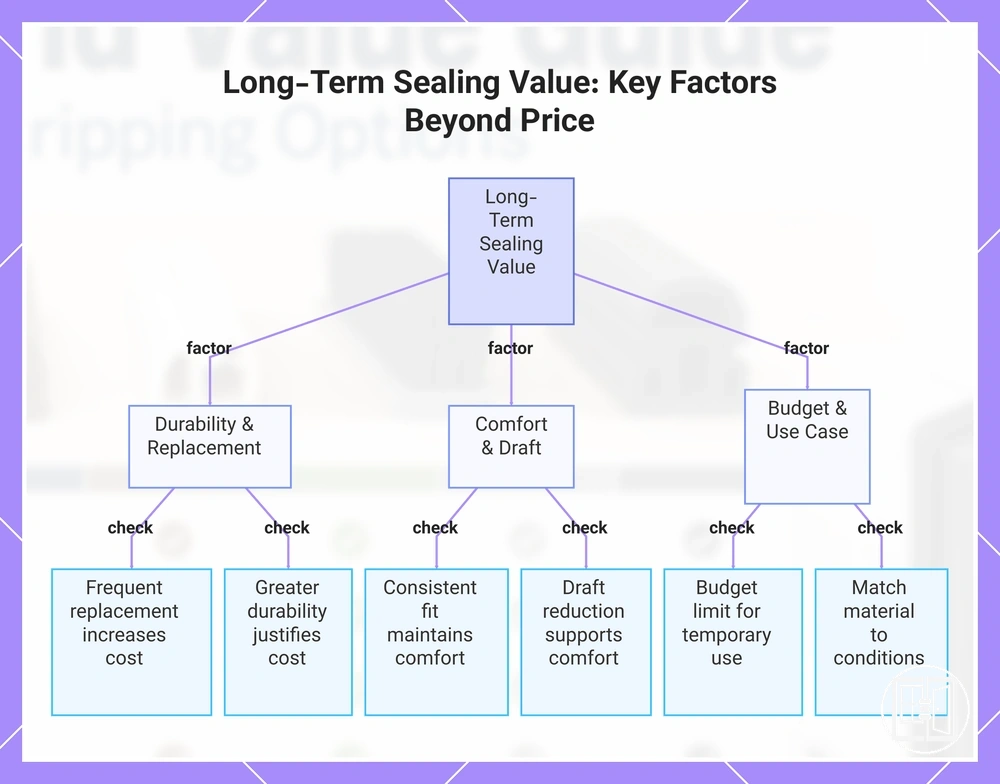
Long-term sealing value beyond upfront price
Long-term sealing value beyond upfront price depends on how long weather stripping continues to perform under normal use rather than on its purchase price alone. A higher-priced seal strip may provide better long-term value when durability reduces replacement frequency, while a lower-cost option may remain suitable for temporary or light-duty applications. The main deciding factor is how the material matches the expected conditions of use.
Replacement frequency affects total ownership cost because weather stripping that needs frequent replacement can increase long-term expense even when the initial purchase price is lower. Material durability, fit, and repeated compression all influence how often a seal may need attention. Where use is light or temporary, a lower-cost insulation strip may still represent reasonable value within a budget limit.
Sustained draft reduction can support comfort when the weather stripping continues to fit the opening correctly over time. Energy-cost relevance depends on factors such as air leakage, installation quality, and the condition of the door or window, so exact savings should not be assumed. A durable draft seal may provide greater long-term value when consistent sealing remains important.
Long-term sealing value beyond upfront price can be assessed by checking whether the expected use matches the material and replacement needs. The following checklist helps compare value without relying on purchase price alone.
- Frequent replacement: Higher replacement frequency may increase total ownership cost over time.
- Material durability: Greater durability may justify a higher upfront cost when the seal experiences regular use.
- Draft reduction: Consistent fit may help maintain comfort when air leakage is an ongoing concern.
- Budget limit: A temporary or lightly used application may make a lower-cost seal strip a practical choice.
- Use case: Match the weather stripping to the expected conditions rather than selecting by price alone.
Long-term value is strongest when durability, replacement frequency, comfort needs, and budget limit are considered together. Paying more for weather stripping is easier to justify when repeated replacement is likely, while a temporary low-cost seal can remain reasonable when long service life is not the primary requirement.
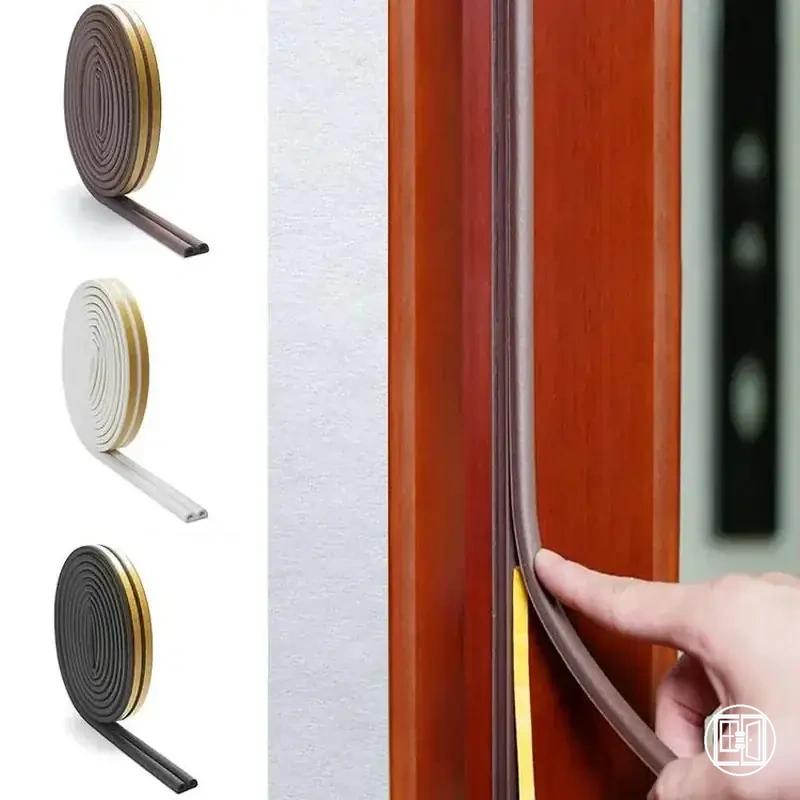
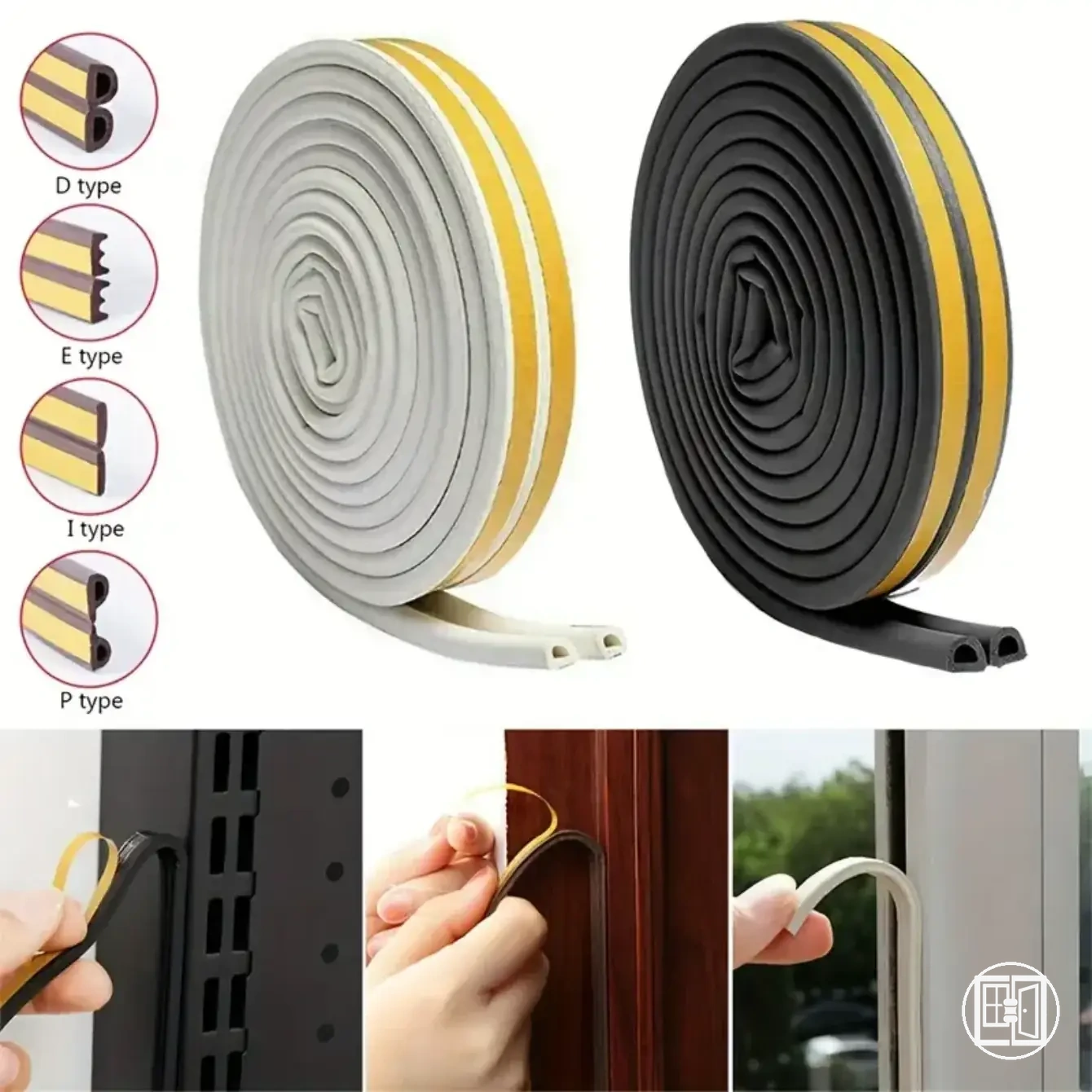
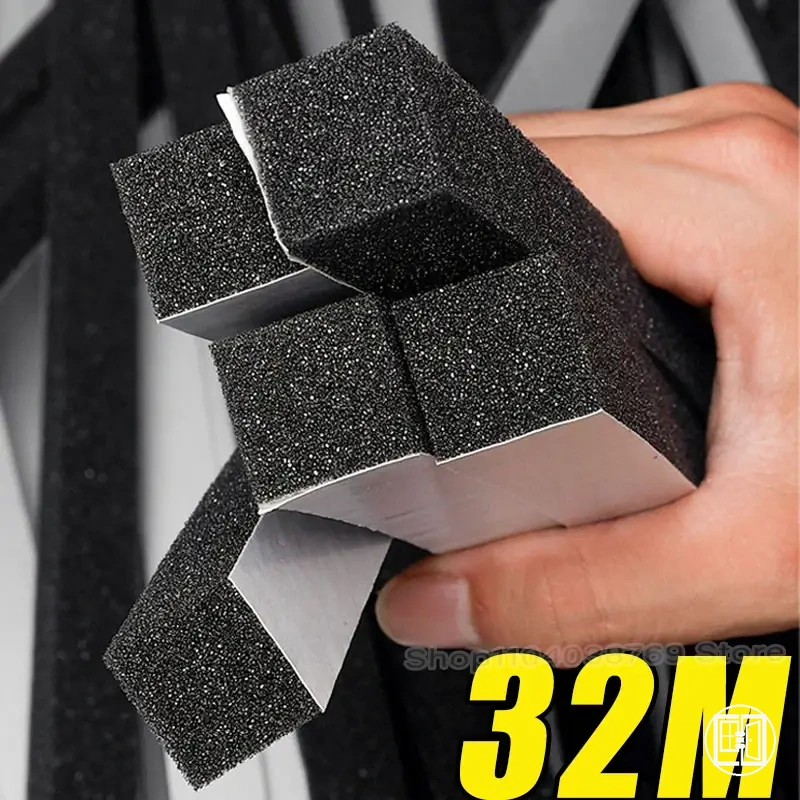
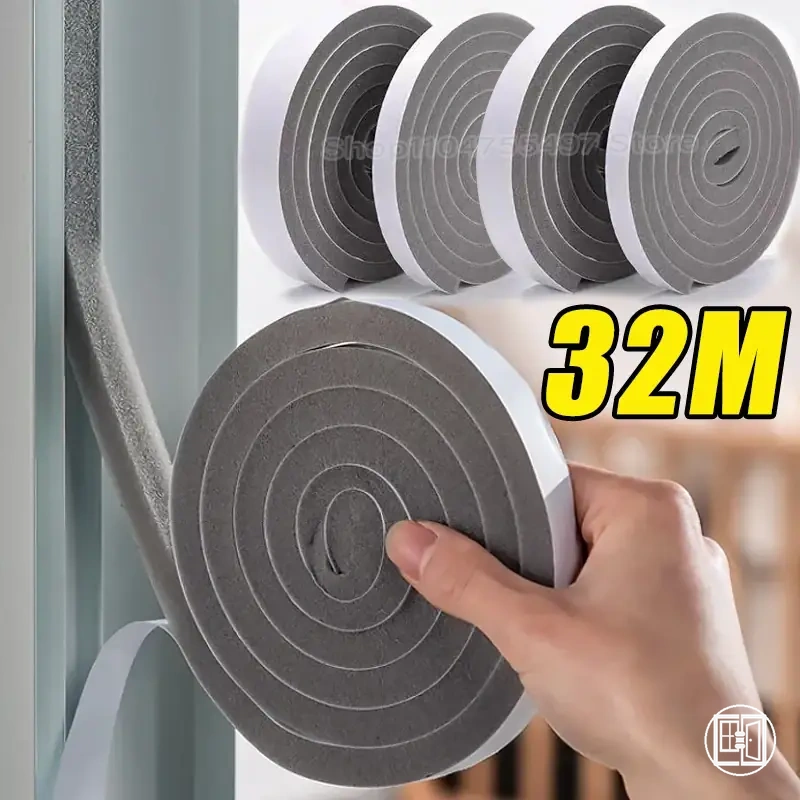
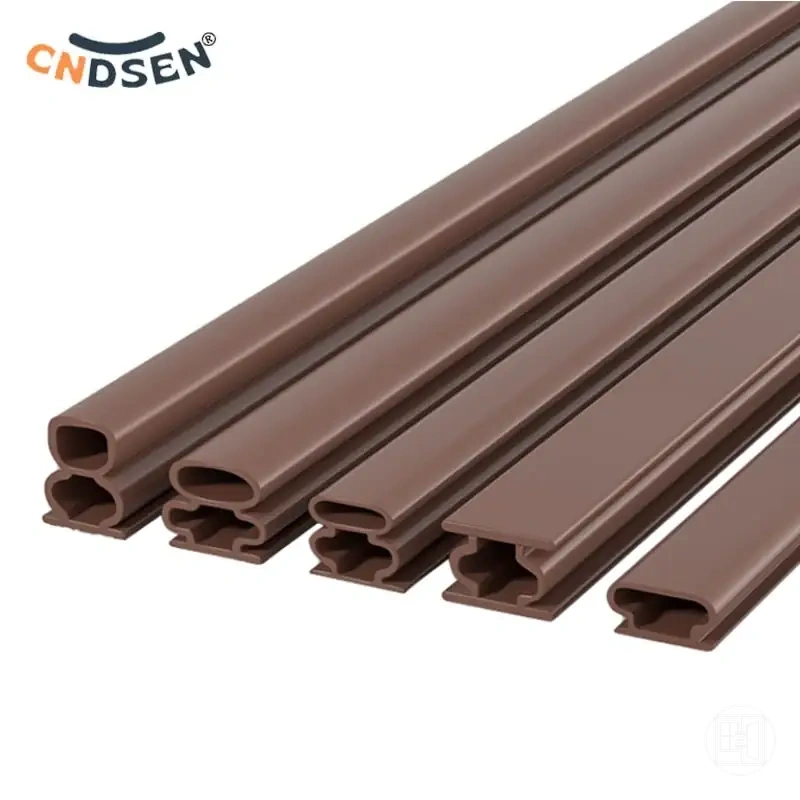
Here are product examples that may make comparison easier. Before buying, always review the compatibility criteria, essential features, and product details.
This chart shows the key factors that determine the long-term sealing value of weather stripping, moving beyond the initial purchase price to consider replacement frequency, durability, comfort, budget, and use case.
Replacement frequency and total ownership cost
Replacement frequency and total ownership cost show why the true cost of weather stripping can change over time. A cheaper seal strip may lose long-term value if exposure, compression wear, adhesive failure, or frequent use leads to repeated replacement. The value depends on how material durability matches the conditions of use.
Total ownership cost combines purchase price, expected replacement cycle, and repeated labour or time. Material type, outdoor exposure, regular opening, and adhesive reliability can all affect replacement frequency, while sustained draft reduction, comfort, and energy-cost relevance depend on the seal continuing to fit the opening. For example, a low-cost insulation strip may cost more over time if it needs repeated replacement, while a more durable draft seal may be easier to justify when wear is expected and the budget limit allows it.
Draft reduction, comfort, and energy-cost relevance
Draft reduction, comfort, and energy-cost relevance can increase the long-term value of weather stripping when air leakage is the main source of discomfort. A well-matched seal strip may improve comfort by reducing unwanted drafts, while any effect on energy-cost relevance depends on the building, the opening, and the quality of the seal. The greatest value is usually achieved when the weather stripping matches the gap and addresses the actual source of air leakage.
Draft source, seal effectiveness, room comfort, heating or cooling load, and user sensitivity all influence the practical value of a draft seal. For example, sealing a noticeable gap around a frequently used door or window may improve comfort even if exact energy-cost savings cannot be predicted. Long-term value also depends on replacement frequency, total ownership cost, durability, and budget limit, because a seal that maintains its fit may remain more cost-effective than one that requires frequent replacement.
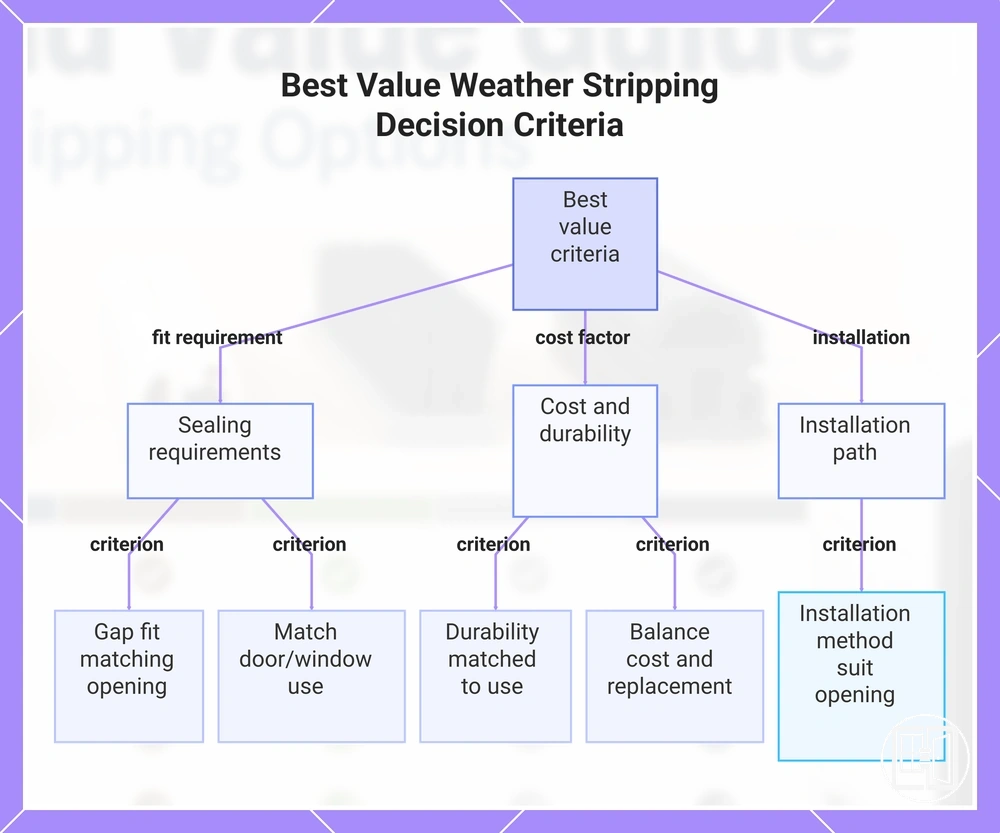
Best value weather stripping decision criteria
Best value weather stripping decision criteria depend on choosing a seal that fits the gap, lasts long enough for the intended use case, and reduces drafts without overbuying. Long-term value comes from balancing performance with replacement frequency, total ownership cost, and budget limit rather than focusing on purchase price alone. Gap fit is the first criterion because weather stripping provides better value when it matches the opening.
Material durability should match how often the door or window is used and the conditions it faces. A more durable seal strip may provide better long-term value when replacement frequency would otherwise be high, while a simpler insulation strip may be sufficient for lighter use. Total ownership cost depends on the replacement cycle as well as the initial purchase price.
Installation path also affects value because an easy-to-fit seal may reduce time and replacement effort when the application is straightforward. Where fit, material, or opening conditions are less clear, reviewing broader selection factors may help compare criteria before choosing a weather stripping option.
Best value weather stripping decision criteria can be checked with the following list before making a decision:
- Gap fit: Choose a seal that matches the opening to support draft reduction and comfort.
- Material durability: Match durability to expected use and replacement frequency to support long-term value.
- Installation path: Consider whether the installation method suits the opening and available time.
- Door or window use case: Select weather stripping that matches movement, exposure, and everyday use.
- Budget limit: A lower-cost option may suit temporary or light-duty use, while a more durable option may provide better value when replacement is likely to be less frequent.
Budget-conscious choices may be appropriate when the sealing task is simple and replacement expectations are modest. Mid-range options can balance durability with cost for regular use, while premium materials may offer stronger value where demanding conditions, longer replacement cycles, or greater comfort and energy-cost relevance justify the additional investment.
Here are product examples that may make comparison easier. Before buying, always review the compatibility criteria, essential features, and product details.
This chart shows the main criteria for selecting weather stripping that provides the best value, balancing fit, durability, cost, and installation.