
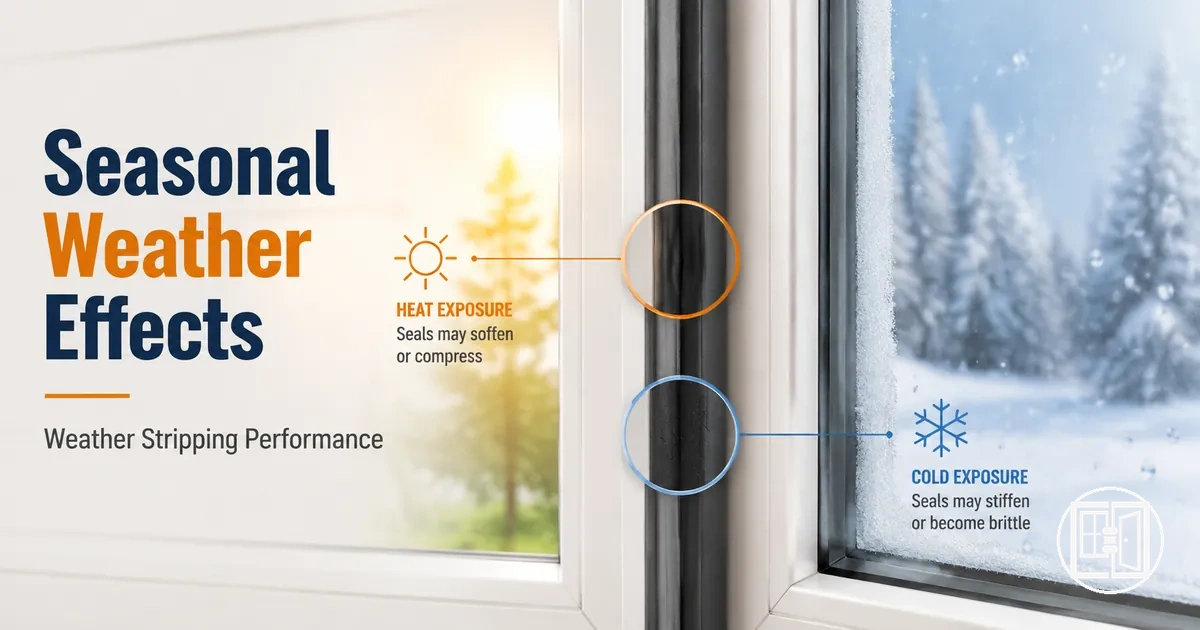
Seasonal Weather Effects on Window and Door Weather Stripping
Weather stripping is the sealing material that helps close small gaps around doors and windows where moving parts meet the frame. Seasonal weather changes can affect how that seal fits, presses, and stays attached because temperature, humidity, and moisture exposure can change the way materials behave across a temperature range. Around a door or window frame, seasonal performance means the weather seal continues to support fit, contact, and durability under changing weather.
In cold weather, a door seal or window seal may feel less flexible, and small gaps can become more noticeable near corners or moving edges. In warmer or humid conditions, adhesive edges, frame movement, or surface moisture may change how consistently the sealing strip holds contact. These changes do not automatically mean the weather stripping has failed, because normal seasonal movement can look similar to early signs of wear.
Seasonal weather can affect drafts and air leaks when compression, adhesive grip, or seal contact changes enough to leave an opening. A seal that works in mild weather may perform differently when the frame shifts, the material stiffens, or humidity affects the contact surface. The result depends on the seal material, frame fit, exposure level, and existing seal condition.
When seasonal changes create noticeable drafts, uneven contact, or loose adhesive edges, the useful response is to read the seal condition before jumping into repair or replacement. This page focuses on seasonal performance effects first, then moves into how seasonal conditions change weather stripping performance by condition, material response, and maintenance timing.
How seasonal conditions change weather stripping performance
Seasonal conditions change weather stripping performance by influencing fit, flexibility, contact pressure, and durability as temperature, moisture, and frame movement change. Weather stripping may respond differently depending on its material, surface condition, and exposure. This condition-to-effect relationship helps explain why sealing effectiveness can vary without meaning the seal is permanently damaged.
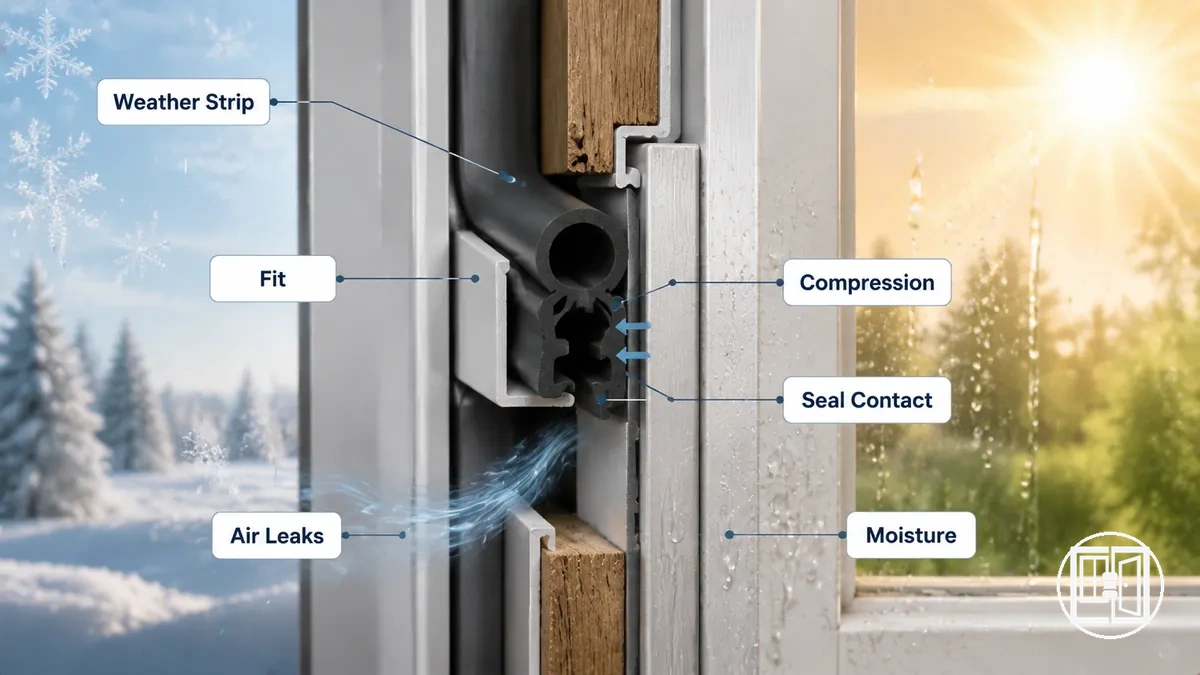
A weather seal may perform well during mild conditions but become less effective after colder temperatures, higher humidity, or repeated moisture exposure alter compression, adhesion, or surface grip. Small changes in frame movement can also affect contact pressure and create gaps that may increase drafts or air leaks. These effects depend on the seal material, frame condition, and environmental exposure rather than the season alone. For example, a seal that performs well in mild weather may allow more air leakage during winter or humid periods if seal contact changes.
How seasonal conditions change weather stripping performance is best understood by comparing the condition with the seal attribute that changes and the likely effect on sealing effectiveness. The summary below provides a general condition-to-outcome overview before later sections examine individual seasonal effects in more detail.
| Condition | Seal attribute affected | Typical change | Performance effect |
|---|---|---|---|
| Cold | Flexibility and compression | May become less flexible | Seal contact may decrease, increasing the chance of drafts |
| Heat | Fit and adhesion | Material response may change | Sealing effectiveness may vary by material and exposure |
| Humidity | Moisture resistance and surface grip | Surface conditions may change | Seal reliability may vary when moisture affects contact |
| Moisture exposure | Adhesion | Bond strength may change over time | Seal contact may become less consistent |
| Frame movement | Contact pressure | Seal alignment may shift | Small gaps or air leaks may develop depending on fit |
Cold weather effects on seal compression, gaps, and drafts
Cold weather can reduce seal compression and make drafts more noticeable when weather stripping becomes less flexible or loses consistent contact with the frame. These changes may expose small gaps without indicating permanent damage. The effect depends on seal condition, frame fit, and how well compression recovery responds during cold weather, influencing compression and drafts.
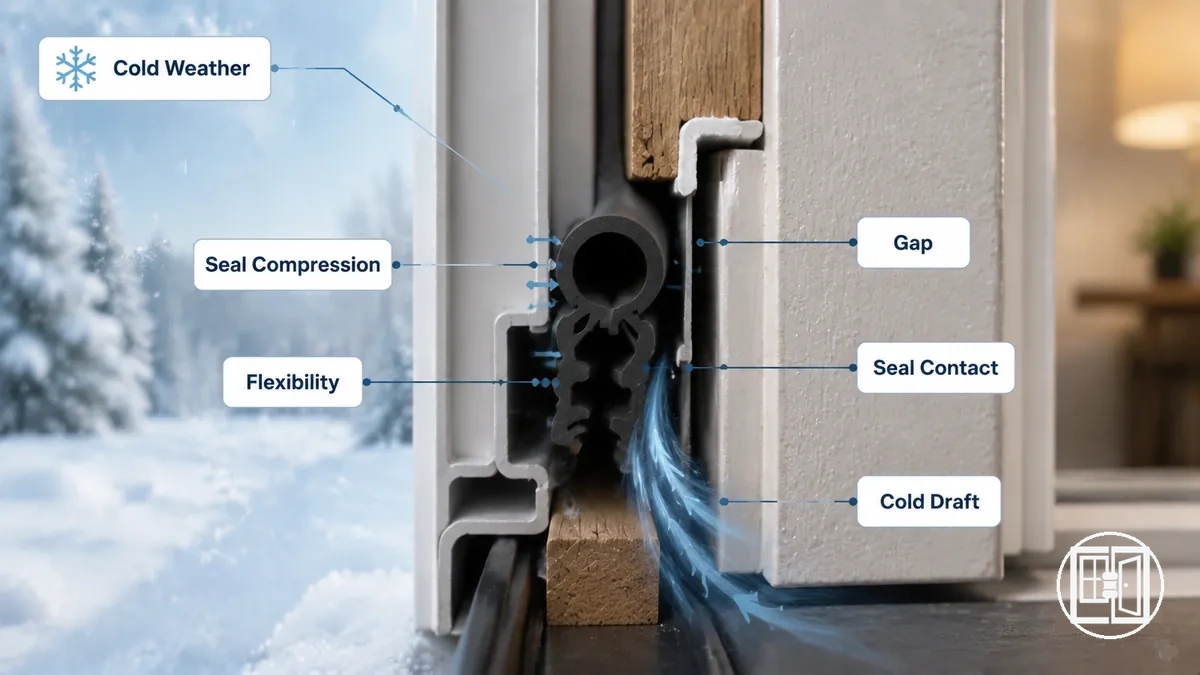
When a door or window becomes drafty during winter conditions, inspect the weather stripping before assuming the material has failed. Lower temperatures may reduce flexibility, affect adhesive grip, or change how the seal presses against the frame. Worn material or poor fit may make these changes more noticeable than they would be on a well-maintained seal.
A seal that performs well during mild weather may allow a door draft or window draft after cold air affects seal contact or frame movement. Small gaps can appear along corners or moving edges if compression recovery is reduced, creating an air leak symptom without confirming permanent failure. The checks below help distinguish temporary seasonal movement from conditions that may need deeper diagnosis.
Check cold-weather effects around frame and seal contact points before deciding whether replacement is necessary. Looking at seal contact, flexibility, and draft persistence provides a clearer way to separate seasonal behavior from worn material or poor fit.
- Check that weather stripping maintains even seal contact along the frame.
- Inspect corner gaps where cold air may pass through more easily.
- Press the seal gently to assess compression feel and compression recovery.
- Look for adhesive edges that may lift during low temperatures.
- Notice whether frame movement or draft persistence continues after weather conditions change.
If draft symptoms continue after these checks, see draft issues in cold weather for a deeper diagnosis.
Shrinking, hardening, freezing, and compression loss
Shrinking, hardening, freezing, and compression loss can reduce local seal contact during cold weather, but these material responses are not universal. Their effect depends on the seal material, condition, and exposure. The image below highlights local cold-response signs that may influence seal contact.
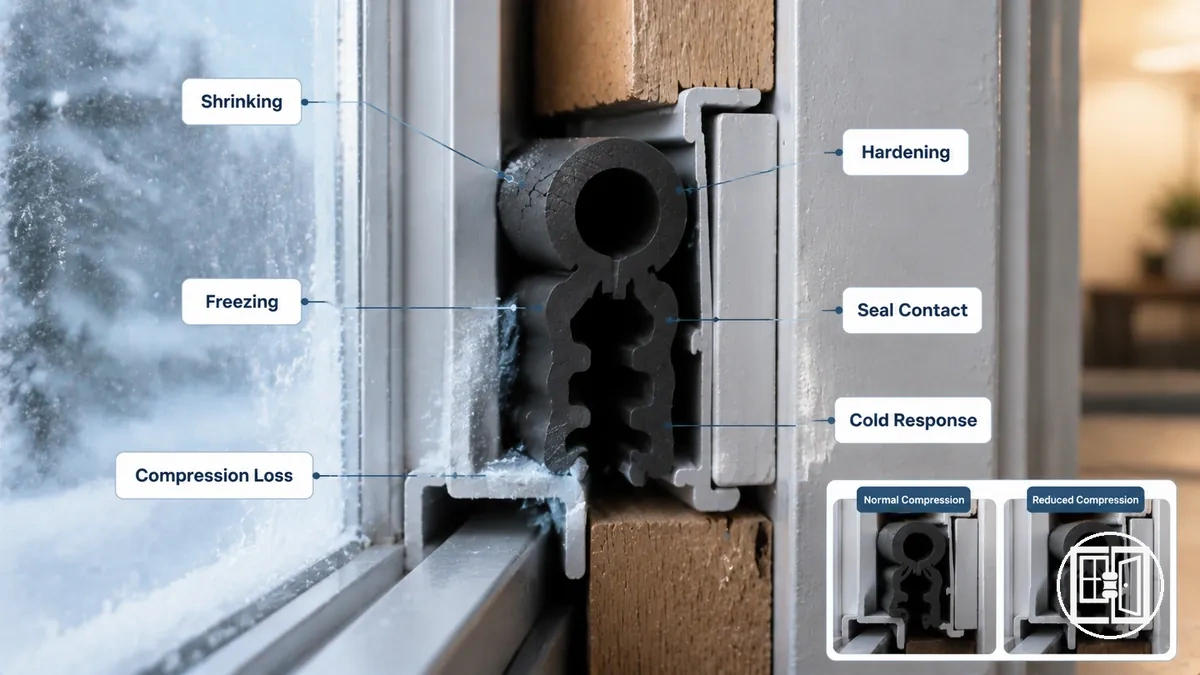
Cold weather does not automatically mean weather stripping is permanently damaged. Temporary stiffness may improve as temperatures rise, while permanent deformation is more likely to remain after conditions change. The following material responses help distinguish reversible stiffness from lasting damage.
- Shrinking: Slight size changes may reduce gap coverage and lower contact pressure.
- Hardening: Increased stiffness may reduce flexibility and lessen draft resistance.
- Freezing: Surface moisture may temporarily affect seal contact until conditions improve.
- Compression loss: Reduced compression recovery may leave small gaps that can decrease draft resistance, depending on the seal material and condition.
Winter draft symptoms around doors and windows
Winter draft symptoms around doors and windows often appear where seal contact becomes less consistent after temperatures drop. Cold air near weather stripping does not confirm every air leak source, but repeated winter drafts can indicate a seasonal seal condition. The image below identifies common locations where winter draft symptoms may appear around weather stripping.
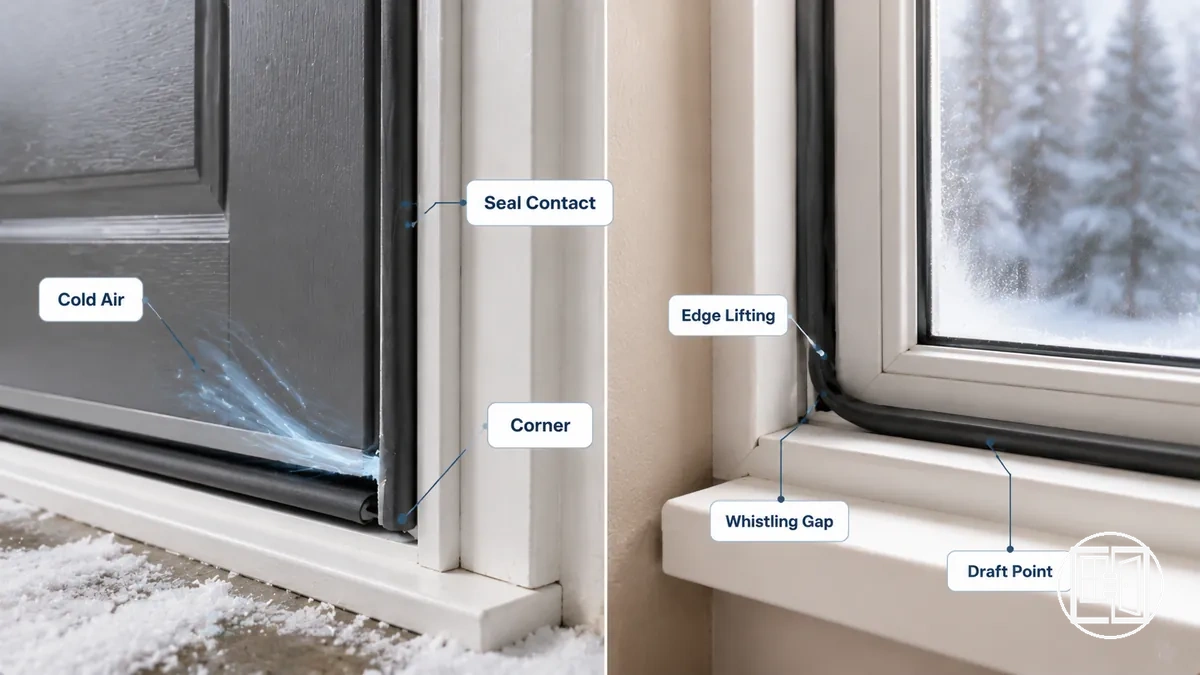
If cold-air movement becomes noticeable around corners or along the seal after colder weather begins, observe where the draft appears before assuming a broader problem. Persistent leakage, uneven contact, edge lifting, frame movement, or whistling gaps that occur repeatedly under similar winter conditions provide a clearer basis for evaluating seasonal seal performance. Use the checklist below to recognize common winter draft symptoms around doors and windows.
- Cold air near corners: Observe door or window corners where seal contact may become uneven.
- Uneven contact: Check whether weather stripping presses consistently against the frame or leaves small gaps from reduced compression.
- Whistling gaps: Listen for air movement around narrow openings that become noticeable after temperature drops.
- Edge lifting: Look for seal edges that no longer sit evenly against the frame, especially at draft points.
- Persistent leakage: If drafts return under similar winter conditions, the seasonal seal condition may deserve closer inspection.
Heat and humidity effects on seals, adhesive, and frame movement
Heat and humidity can influence seal softness, expansion, adhesive stability, and frame movement, which may change how weather stripping maintains seal contact. These effects vary by seal material, exposure, surface preparation, and frame type rather than occurring under every summer condition. Heat and humidity effects on seals, adhesive, and frame movement primarily influence seal contact and overall weather stripping performance.
Heat and humidity affect different parts of the sealing system through different mechanisms. Heat may increase seal softness or contribute to expansion in the seal material or frame, while humidity may influence adhesive stability, surface moisture, or local swelling that changes seal contact. Doors or windows may also move differently against the weather seal as frame movement changes with seasonal conditions, which can contribute to lifting, misalignment, or small gaps. These outcomes depend on material, exposure, surface preparation, frame type, and seal condition, so any adjustment need remains conditional.
| Seasonal condition | Main component affected | Typical response | Possible outcome |
|---|---|---|---|
| Heat | Seal material and frame | Seal softness, softening, or expansion | Seal contact or alignment may change depending on fit and exposure |
| Humidity | Adhesive layer and contact surface | Swelling, lifting, or reduced adhesive stability | Seal contact may become less consistent when moisture affects the surface |
Heat-driven expansion mainly changes how the seal or frame fits together, while moisture-driven effects more often influence adhesive performance or contact quality. Temporary seasonal changes do not necessarily indicate failure, but persistent misalignment, lifting, or reduced sealing performance may justify closer inspection when the same conditions continue.
Thermal expansion around window and door frames
Thermal expansion around a window frame or door frame can change the contact relationship between weather stripping and the closing surface by affecting seal contact, clearance, and contact pressure. These changes may increase opening resistance or contribute to uneven sealing during heat, even when the weather seal itself remains intact. The main attribute affected is the contact relationship between the frame and the weather seal.
When heat causes the frame or sealing strip to expand, available clearance may decrease enough to increase contact pressure or make a door or window feel tighter during operation. In other situations, uneven expansion may shift seal contact and create uneven sealing if the frame, material, exposure, or fit responds differently across the opening. Apparent fit changes do not necessarily indicate seal failure because thermal expansion can temporarily alter how weather stripping meets the closing surface. The observed outcome depends on the material, frame type, exposure, fit, and seal condition.
| Expansion effect | Possible contact change |
|---|---|
| Reduced clearance | Higher contact pressure and increased opening resistance |
| Uneven frame or seal expansion | Shifted seal contact or uneven sealing depending on material response and fit |
Moisture and humidity effects on seal contact
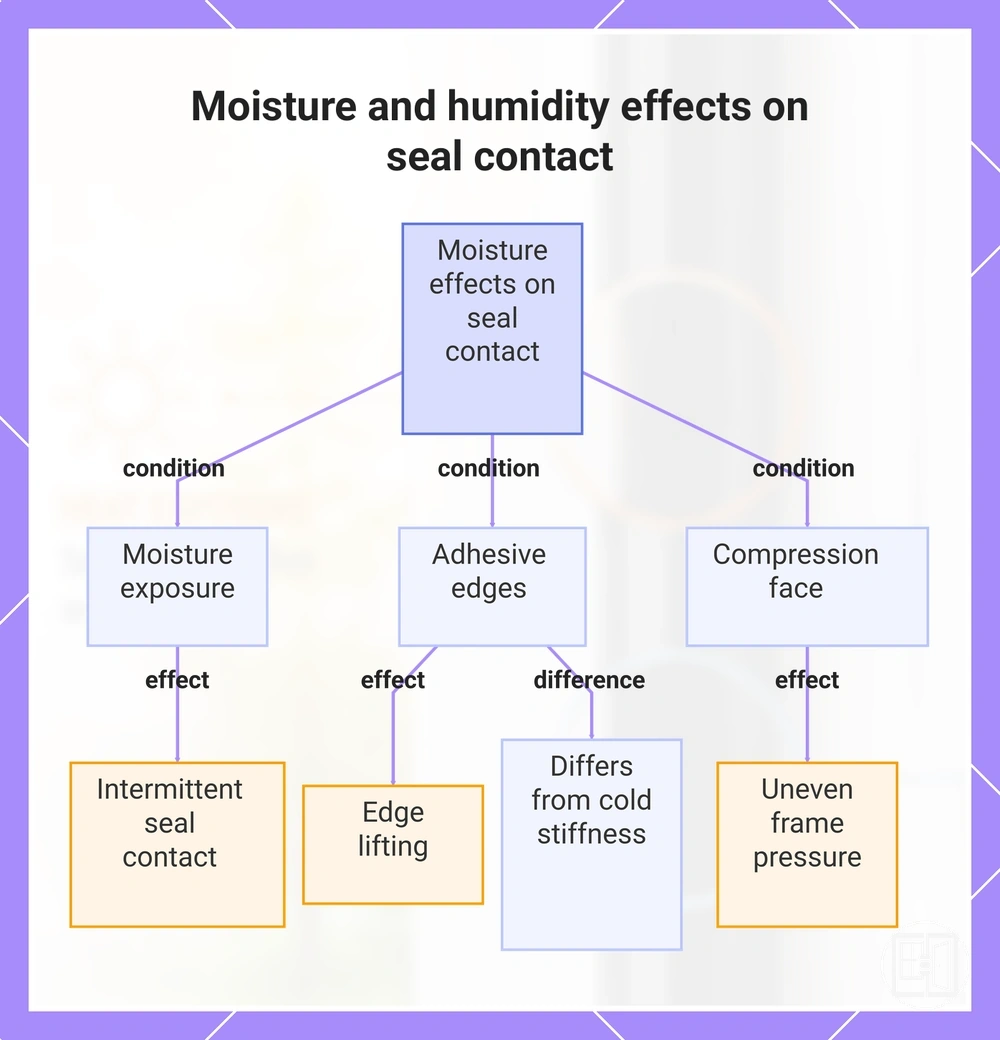
Moisture and humidity can affect seal contact by changing surface grip, adhesive edges, and the consistency of the compression face where weather stripping meets the frame. Depending on the material, exposure, frame type, fit, and surface condition, these changes may reduce sealing consistency without indicating permanent seal failure. The main attribute affected is seal contact.
When moisture exposure or humid conditions affect the sealing surface, weather stripping may respond differently from heat-related expansion or cold-weather stiffness. Humidity may reduce surface grip, influence adhesive edges, or leave residue on the compression face, which can contribute to intermittent contact or reduced sealing consistency. The following conditions help distinguish moisture-related contact changes while keeping the focus on seasonal weather stripping performance.
- Moisture exposure: Reduced surface grip may contribute to intermittent seal contact and small air movement.
- Adhesive edges: Prolonged humidity may encourage edge lifting, depending on the material, surface preparation, and exposure.
- Compression face: Local swelling or residue may change how evenly the weather seal presses against the frame.
- Local example: A flexible seal with slight edge lifting during humid weather may differ from cold-weather stiffness because seal contact changes without the material becoming noticeably rigid.
This chart shows the three main conditions through which moisture and humidity affect weather stripping seal contact, along with their observable effects and a key distinction.
Material behavior across seasonal temperature changes
Material behavior across seasonal temperature changes depends on how each weather stripping material responds to changing temperature, moisture, and seasonal exposure. Foam, rubber, silicone, vinyl, metal, and adhesive-backed seals differ in flexibility, compression recovery, durability, adhesive dependence, and temperature tolerance, so seasonal performance depends on exposure, gap size, frame type, contact pressure, and expected seasonal range rather than on a universally suitable material. The local focus is material response.
The comparison below explains how common weather seal materials may respond under seasonal conditions. These criteria help interpret seasonal behavior without ranking materials, because seal contact and performance also depend on frame fit, surface condition, and the operating environment.
| Material | Seasonal stress | Likely response | Practical implication |
|---|---|---|---|
| Foam | Repeated temperature changes | Flexibility and compression recovery may decline over time | Seal contact may become less consistent if recovery decreases |
| Rubber | Cold or prolonged heat exposure | Flexibility may vary with seasonal conditions | Performance depends on contact pressure, exposure, and fit |
| Silicone | Changing seasonal temperatures | Often maintains flexibility across a broad temperature tolerance range | Seal contact may remain more consistent when correctly fitted |
| Vinyl | Temperature fluctuations | Material response may influence flexibility and compression recovery | Seasonal performance depends on frame type and gap size |
| Metal | Thermal expansion and contraction | Contact characteristics may change as temperatures vary | Seal effectiveness depends on alignment and contact pressure |
| Adhesive-backed seals | Heat, humidity, and moisture exposure | Adhesive performance may vary with surface condition | Seal contact may become less consistent if adhesive edges begin lifting |
Material behavior should be evaluated according to seasonal exposure, compression load, frame type, and seal contact rather than by material alone. A weather stripping material that performs well in one seasonal condition may respond differently when moisture, temperature range, or surface conditions change.
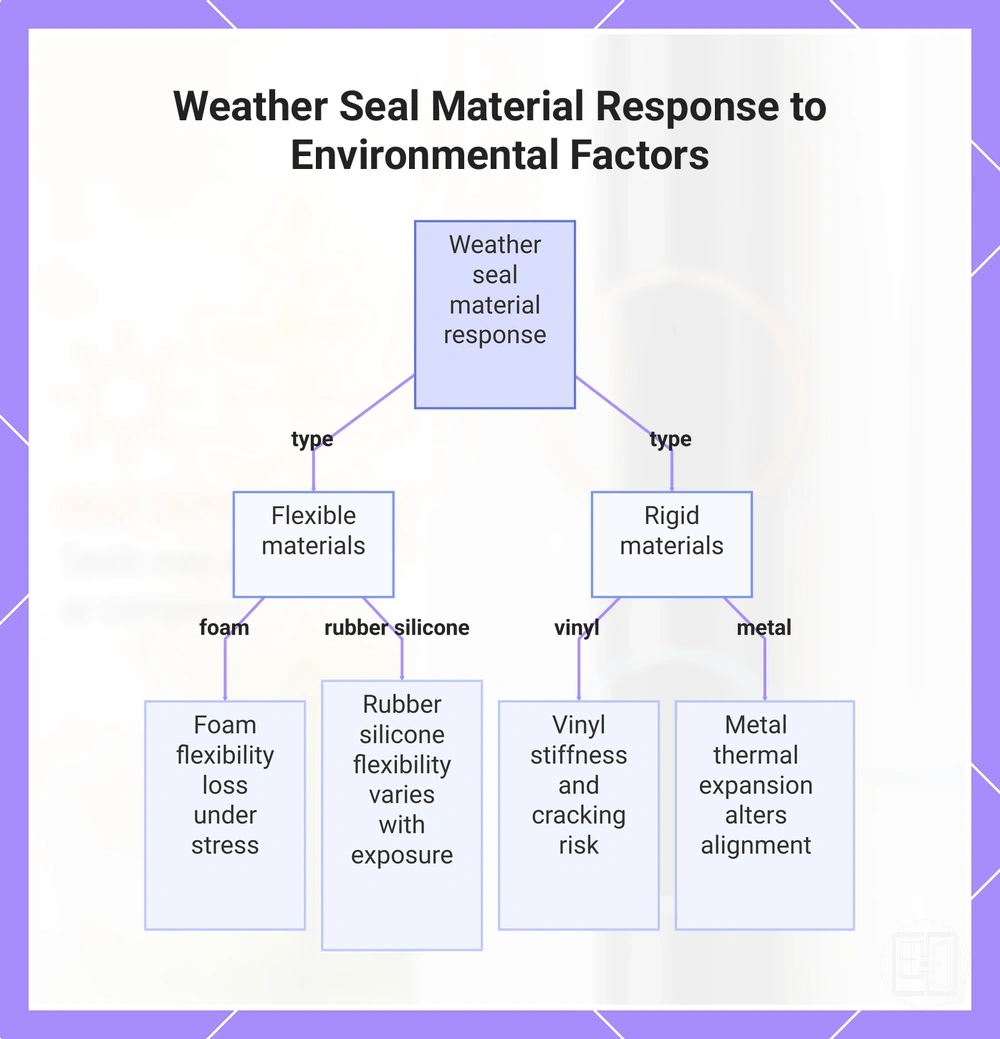
Foam, rubber, silicone, vinyl, and metal seal response
Foam, rubber, silicone, vinyl, and metal seal response varies with seasonal stress, temperature, moisture exposure, and compression load rather than with material type alone. Flexibility, cracking, deformation, and seal contact can change differently across material families depending on placement, frame fit, and environmental conditions. The local focus is material response.
Seasonal weather can influence each material family differently, so performance should be assessed according to exposure and seal contact rather than by material alone. The grouped observations below summarize common seasonal response patterns without creating a buyer comparison or implying universal suitability.
- Foam: Repeated seasonal stress may reduce flexibility or compression recovery, which can affect seal contact when compression load remains high.
- Rubber and silicone: Cold, heat, or humidity may influence flexibility differently depending on exposure, placement, material condition, and frame contact.
- Vinyl: Temperature changes may contribute to stiffness, deformation, or localized cracking, depending on seasonal conditions, fit, and exposure.
- Metal seal: Thermal expansion or contraction may alter alignment and contact pressure, influencing weather stripping performance without indicating material failure.
- Example: The same weather seal material may respond differently in sheltered and exposed locations because compression load, seasonal exposure, and seal contact are not identical.
This chart shows how flexible and rigid weather seal materials respond differently to seasonal stress, temperature, moisture, and compression load, emphasizing that performance depends on exposure and placement rather than material alone.
Adhesive-backed seals under cold and heat
Adhesive-backed seals under cold and heat respond to seasonal temperature because surface temperature can influence adhesive tack, edge contact, and seal movement. Cold or heat may change how consistently the adhesive maintains contact with a door or window frame, although the outcome also depends on surface cleanliness, application temperature, exposure, frame fit, and seal condition. The local focus is material response.
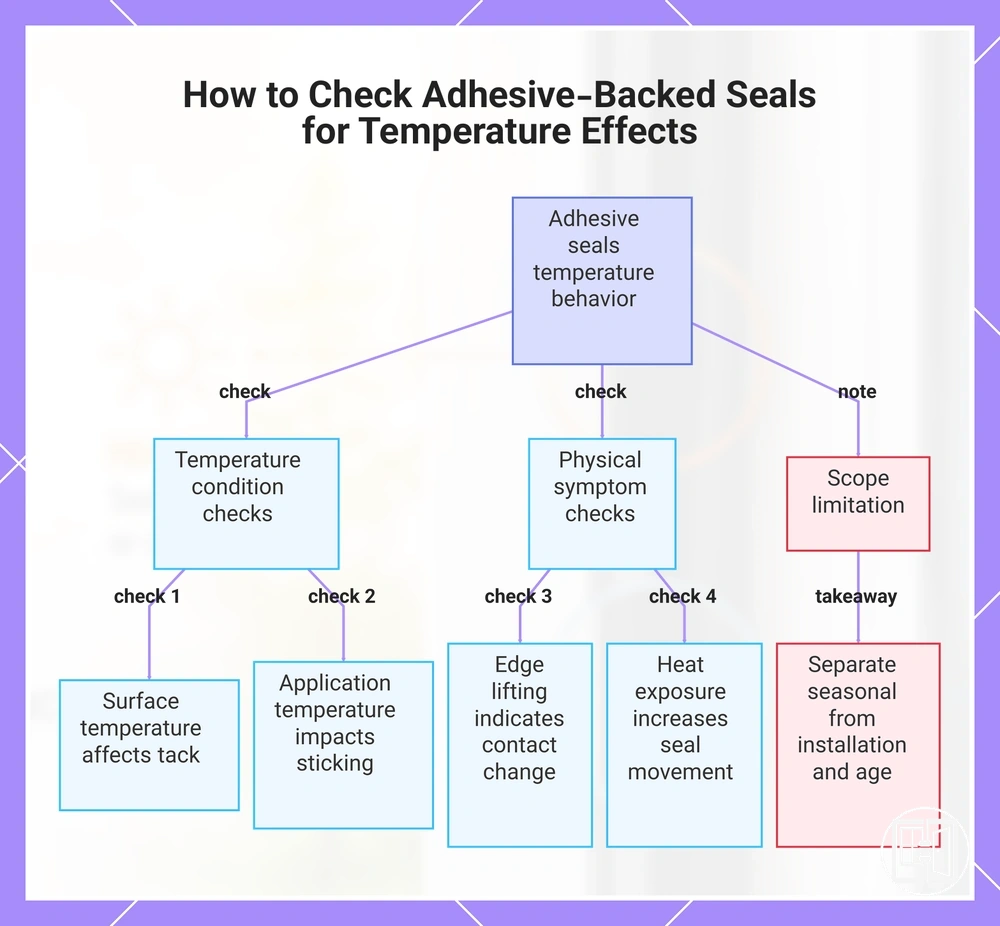
Seasonal temperature effects should be considered separately from installation quality or material age. Edge lifting, reduced adhesive grip, or seal movement may result from seasonal conditions, installation-related factors, or ageing, while this section addresses only the seasonal performance layer. Use the following checks to interpret temperature-related adhesive behavior while keeping exposure and seal contact in context.
- Surface temperature: Check whether cold or heat may be affecting adhesive tack before judging weather stripping performance.
- Application temperature: A sealing strip applied under unsuitable temperature conditions may show different sticking quality as seasonal conditions change.
- Edge lifting: Lifted edges during cold or heat may indicate changing adhesive contact rather than immediate material failure.
- Heat exposure: Prolonged warmth may increase seal movement or reduce consistent edge contact, depending on exposure and surface condition.
- Surface cleanliness: A clean contact surface can help determine whether reduced adhesive grip is more closely related to seasonal conditions than to another contributing factor.
This chart shows the key checks to determine if adhesive-backed seal behavior is due to seasonal temperature, and reminds that these effects are separate from installation or ageing factors.
Seasonal timing conditions for applying or adjusting weather stripping
Seasonal timing for applying, adjusting, or checking weather stripping depends on surface temperature, moisture level, frame movement, adhesive requirements, and seal compression rather than on a particular season alone. Stable seasonal conditions can make seal contact easier to evaluate, while changing weather may temporarily influence fit or performance. Seasonal timing is condition-dependent.
Before applying or adjusting a weather seal, consider whether the surface is clean and dry, whether the door or window frame is showing seasonal movement, and whether adhesive requirements depend on suitable application conditions specified by the manufacturer. Seal compression should also be assessed under normal operating conditions because temporary cold or heat may influence contact. The criteria below help compare timing conditions before making adjustments.
| Timing condition | What to check | Caution | Performance implication |
|---|---|---|---|
| Stable seasonal conditions | Surface temperature and seal compression | Avoid judging performance during rapidly changing weather | Seal contact may be easier to assess |
| Moisture present | Moisture level and surface condition | Wet surfaces may affect adhesive requirements | Adhesion or fit may become less consistent |
| Seasonal frame movement | Door or window frame alignment | Temporary movement may change seal contact | Checking again after conditions stabilize may provide a more reliable assessment |
| Adhesive-backed weather stripping | Application temperature and edge contact | Follow manufacturer guidance where available | Sticking quality may depend on application conditions |
| Reduced seal compression | Compression recovery and contact pressure | Temporary seasonal changes do not necessarily indicate permanent wear | Light adjustment or maintenance may be more appropriate than immediate replacement |
If seasonal conditions remain unstable, waiting before making significant adjustments may help distinguish temporary environmental effects from ongoing wear. Rechecking seal contact, frame movement, and seal compression after conditions become more consistent can support a more reliable maintenance decision without assuming replacement is immediately necessary.
Seasonal inspection cues for maintenance or replacement
Seasonal inspection helps distinguish temporary weather-related changes from conditions that may require maintenance or replacement of weather stripping. Visual observations should be interpreted alongside seasonal conditions because seal contact, material response, and air movement can change with temperature, moisture, and exposure. Seasonal inspection is intended to separate inspection findings from replacement decisions.
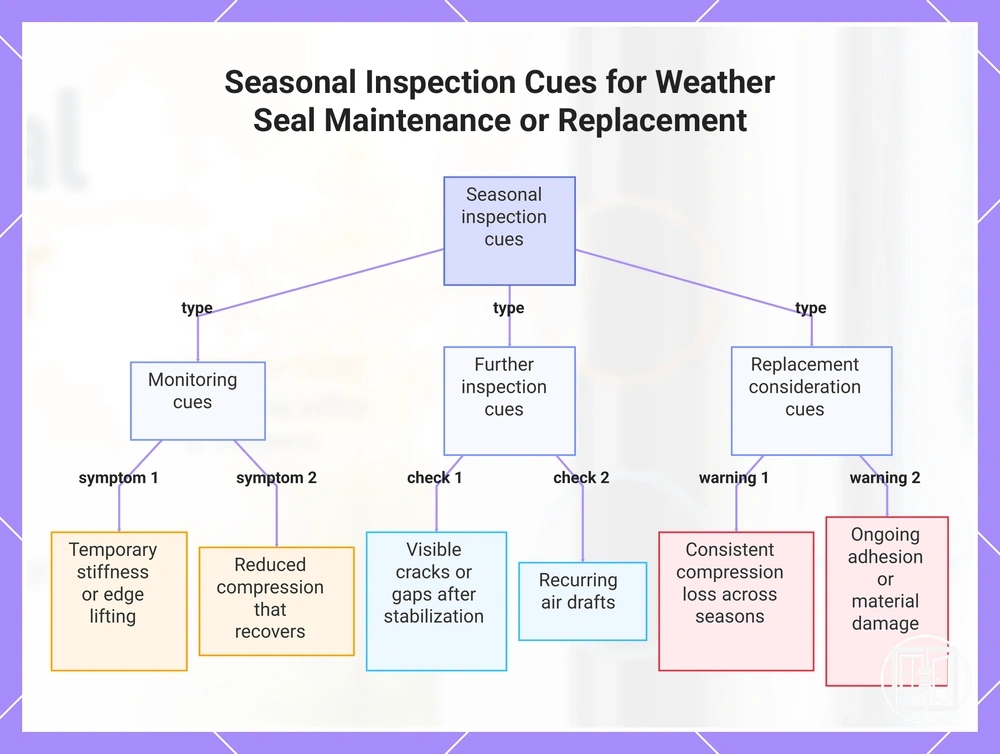
If a door or window begins to feel different after a seasonal change, inspect the weather seal before assuming it has reached the end of its service life. Temporary stiffness, minor edge lifting, or reduced compression may reflect seasonal conditions rather than permanent deterioration, while recurring issues under similar conditions may justify closer attention. Interpreting these cues over time supports appropriate maintenance timing.
Use the following seasonal inspection cues to decide whether continued monitoring or further action is more appropriate.
- Visual cue: Look for cracks, edge lifting, or visible gaps that remain after seasonal conditions stabilize, as these may justify further inspection.
- Tactile cue: Gently check whether the weather seal remains flexible and whether compression recovers after light pressure.
- Air movement cue: Recurring drafts around the same door or window frame area may indicate that seal contact should be checked again before considering replacement.
- Adhesion cue: Local lifting along adhesive-backed sections may support monitoring or maintenance, depending on exposure, fit, age, and surface condition.
- Compression cue: Compression that does not recover consistently across repeated seasonal inspections may warrant replacement consideration rather than continued observation.
Seasonal inspection cues should be considered together because a single sign rarely justifies replacement on its own. Persistent material damage, recurring air movement, ongoing adhesion problems, or repeated compression loss across similar seasonal conditions provide stronger reasons to move beyond monitoring. For broader planning, see maintenance timing.
This chart organizes seasonal inspection cues by the action they suggest: continued monitoring, further inspection, or replacement consideration.
Temporary seasonal movement versus failed seal symptoms
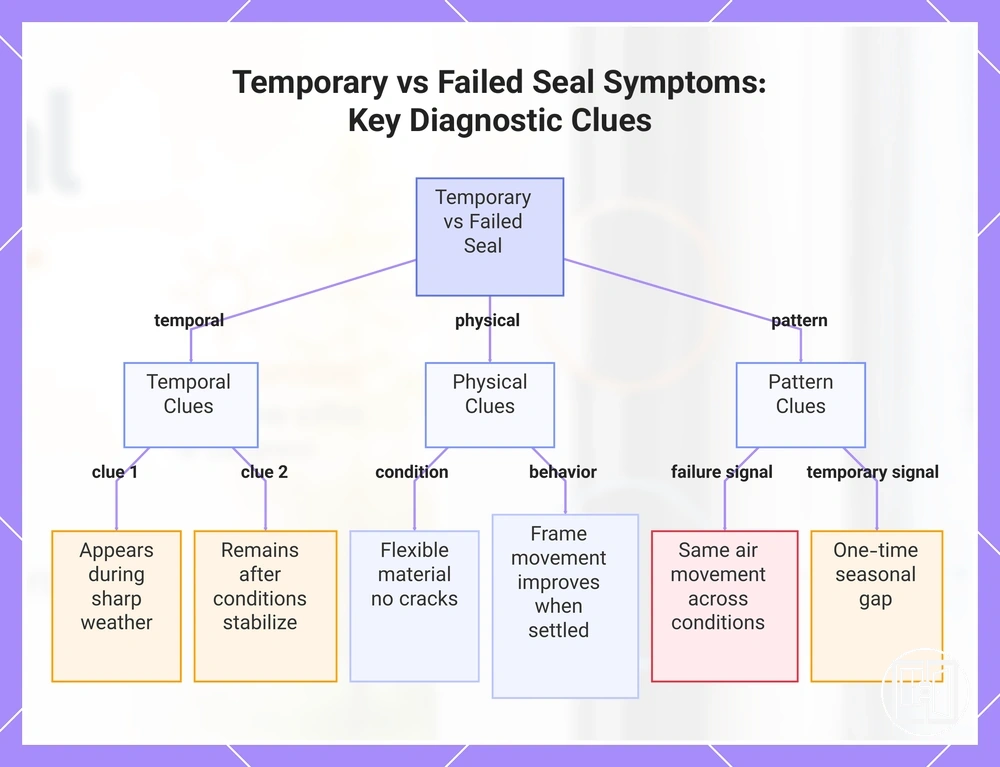
Temporary seasonal movement and failed seal symptoms can look similar because both may create gaps, reduced seal contact, or air movement during weather changes. The difference is usually read through timing, persistence, material condition, frame behavior, and repeatability rather than one symptom alone. The symptom boundary is whether the change appears condition-specific or continues across seasons.
A temporary gap during extreme cold may reduce contact only while the frame or seal is responding to the seasonal condition. A cracked weather seal that leaks in mild, cold, and warm conditions is more likely to suggest a failed seal symptom, especially when the material condition remains visibly damaged. Use the checklist below to organize temporary seasonal movement versus failed seal symptoms by observable conditions and likely meaning.
- Timing: A symptom that appears mainly during sharp weather changes may indicate temporary seasonal movement.
- Persistence: A gap or draft that remains after conditions stabilize may point toward failed seal symptoms.
- Material condition: Flexible material with no visible cracking may support monitoring, while cracked or deformed material may require action.
- Frame behavior: Contact changes that follow door or window frame movement may be seasonal if they improve when conditions settle.
- Repeatability: The same air movement in the same location across different conditions is a stronger signal for seal failure than a one-time seasonal gap.
This chart helps distinguish temporary seasonal seal movement from failed seal symptoms using temporal, physical, and pattern clues.
Cracking, shrinking, loose edges, and persistent air leaks
Cracking, shrinking, loose edges, and persistent air leaks are stronger indicators of weather stripping deterioration when they continue beyond normal seasonal stress. These conditions may reduce seal contact, increase drafts, or contribute to moisture entry, but their significance depends on material condition, exposure, frame type, fit, age, and persistence rather than a single observation. The symptom boundary is whether the condition remains after seasonal effects have passed.
If these symptoms continue after seasonal conditions become more stable, compare the observed condition with the checklist below before concluding that the weather seal has failed. The checklist links each visible symptom to its affected seal attribute and likely performance effect, helping identify when persistent air leaks may justify deeper diagnosis.
- Cracking: Damaged seal material may lose flexibility, increasing the risk of drafts or moisture entry where seal contact is interrupted.
- Shrinking: Reduced seal size may lower compression, creating recurring gaps that can allow persistent air leaks.
- Loose edges: Lifted sealing strip edges may indicate adhesion loss, reducing consistent contact with the door or window frame.
- Persistent air leaks: Air movement that continues across similar seasonal conditions may indicate an ongoing weather stripping performance issue and can warrant further diagnosis when repeatable.
Choosing weather stripping for extreme cold, heat, and humidity
Choosing weather stripping for extreme cold, heat, and humidity depends on matching seal characteristics to seasonal exposure rather than relying on a single material attribute. Material tolerance, compression recovery, adhesive dependence, gap fit, frame type, and moisture exposure all influence how weather stripping may perform under changing seasonal conditions. Seasonal exposure is the primary selection frame.
Selection should begin by comparing the conditions the weather seal is most likely to experience with the attributes needed to maintain consistent seal contact. Extreme cold may increase the importance of compression recovery, while heat and humidity can place greater emphasis on material tolerance, adhesive dependence, and moisture exposure. Gap fit should also suit the door or window frame because seasonal movement may influence contact over time. The table below summarizes the main selection criteria.
| Seasonal exposure | Seal characteristic | Selection risk | Practical priority |
|---|---|---|---|
| Extreme cold | Material tolerance and compression recovery | Reduced flexibility or incomplete seal contact | Prioritize consistent compression under low-temperature conditions |
| Heat | Material tolerance and gap fit | Expansion may alter seal contact | Match the weather seal to expected frame movement and exposure |
| Humidity | Adhesive dependence and moisture exposure | Reduced adhesion or inconsistent seal contact | Consider surface condition and moisture-related demands |
| All-weather sealing | Balanced material tolerance, frame type, and gap fit | One attribute alone may not suit every seasonal condition | Balance seasonal range with observed operating conditions |
A cold-draft home may benefit from greater emphasis on compression recovery, while a sun-exposed frame may place more importance on material tolerance. Humid rooms may require closer attention to adhesive dependence and moisture exposure, whereas all-weather sealing depends on balancing these characteristics with frame type and gap fit rather than relying on one attribute alone.
Seasonal suitability should be matched to observed conditions instead of being assumed from a single material characteristic. Periodic inspection of seal contact, material condition, and frame movement can help confirm whether the selected weather stripping continues to suit changing seasonal conditions over time.